
The Modern Homework Blueprint
How Parents Help Kids Study Without Stress: A Practical, Research-Backed Guide for Calm Routines, Better Focus, and Confident Learners
📑 Quick Navigation
- Why Homework Has Become Stressful
- 3-Step Homework Reset (Emergency Fix)
- Why Homework Feels Harder
- Homework Support by Age Group
- The Calm Homework Routine
- Reducing Homework Anxiety
- How to Talk During Homework
- Tools & Technology
- When to Step In & When to Step Back
- Real Homework Reset Case Study
- Frequently Asked Questions
- Downloadable Resources
Why Homework Has Become a Stress Trigger (and How to Fix It)
Homework was meant to reinforce learning. For many families today, it has become the most emotionally charged part of the day.
Parents report nightly conflicts, tears, avoidance, and exhaustion—while children associate learning with pressure instead of curiosity. This is not a parenting failure. This is a systems problem.
The Modern Homework Crisis
Modern children face unprecedented academic and developmental pressures:
- Longer school days – Extended hours reduce natural downtime
- Increased academic expectations – More content, faster pace, higher standards
- Constant digital distractions – Competing attention from devices and notifications
- Reduced unstructured downtime – Limited free play and creative time
- Parental anxiety about future outcomes – Performance pressure filters down from families
The result is predictable: cognitive overload.
📌 What This Guide Covers
This is not a “do more” guide. This is a “do homework differently” guide. You will learn:
- How to help your child with homework without anxiety or micromanagement
- How to build sustainable homework routines (tailored by age)
- When to step in—and critically, when to step back
- How to use tools and technology responsibly
- How top educators structure homework support at home
- Real scripts and language patterns that reduce conflict
Quick Emergency Fix: The 3-Step Homework Reset
If homework time is already tense, start here. Use this reset tonight.
The 3-Step Reset reduces resistance by 30-40% because it restores emotional safety and a sense of control.
This is not about completing homework perfectly. This is about breaking the stress cycle so learning can happen.
Step 1: Pause the Task, Not the Learning
Stop the current assignment for 10 minutes. Take a genuine break—no redirecting to another task.
Why this works: Stress and anxiety block working memory. When your child is frustrated or resistant, their brain literally cannot process new information effectively. A real pause resets the nervous system.
Step 2: Reduce the Load, Not the Expectation
Agree on a smaller, achievable goal: “Let’s finish 3 questions, not all 10.” This is still learning and practice—just in manageable chunks.
Why this works: Reducing overwhelm restores control. When children feel trapped by impossible scope, they shut down. A smaller goal is still productive.

Step 3: Shift From Instruction to Support
Ask guiding questions instead of explaining:
- “What part feels confusing?”
- “What do you think the first step is?”
- “Can you show me where you got stuck?”
Why this works: Instruction triggers resistance (“I already know this”). Genuine questions invite thinking and problem-solving. This maintains agency and builds actual learning skills.
✓ Expected Result After This Reset
Your child will likely:
- Feel less trapped and more in control
- Re-engage more willingly with the task
- Complete the reduced goal without major conflict
- Experience learning as something they can manage
This single reset often prevents hours of conflict.
Why Homework Feels Harder Than It Used To: The Real Reasons
Before building sustainable routines, it helps to understand the underlying causes of homework stress. Understanding the “why” helps you address root causes, not just symptoms.
1. Cognitive Overload in Modern Childhood
Children are expected to process massive volumes of information daily. By the time they leave school, their working memory is depleted. Homework adds demand when mental energy is already critically low.
- School day: 6-7 hours of continuous cognitive demand
- Extracurricular activities: 5-10 hours per week
- Digital engagement: 4-7 hours per day average (US children)
- Sleep deficit: Many children sleep 60-90 minutes less than needed
The equation is simple: High demand + Low recovery = Low capacity for homework.
2. Executive Function Gaps (Not Laziness)
Executive function—planning, time management, task initiation, impulse control—develops gradually through childhood and adolescence. It’s not fully mature until age 25.
Young children (5-8) cannot: Plan multi-step tasks, manage time independently, shift between subjects easily, or sustain focus on non-preferred tasks.
Older children (9-12) struggle with: Prioritizing tasks, estimating how long things take, breaking large projects into steps, or recovering from setbacks.
Teens (13+) often battle: Competing priorities, motivation for tasks that feel irrelevant, and delayed gratification pressure.
Homework struggles are often developmental, not motivational.
3. Fear of Failure (The Invisible Driver)
When children experience repeated correction, comparison with peers, or performance pressure, they develop performance anxiety. This anxiety literally reduces cognitive capacity.
Fear-based responses include:
- Avoidance (“I forgot my homework”)
- Perfectionism (endless erasing, redoing)
- Learned helplessness (“I can’t do it”)
- Emotional dysregulation (tears, anger, shutdown)
None of these are character flaws. All are protective responses to perceived threat.
4. Parent-Child Role Confusion
When parents become “home teachers,” the emotional relationship shifts. Parents are supposed to be safe people. Teachers are supposed to be instructors. When these roles merge, conflict increases dramatically.

The Science Behind Homework Stress
| What Happens in Stress | Impact on Learning | What Children Experience |
|---|---|---|
| Amygdala activation (threat response) | Working memory shuts down; fight/flight/freeze kicks in | Can’t think, only react; resistance or shutdown |
| Elevated cortisol levels | Reduces ability to process complex information | Struggles with multi-step tasks; careless mistakes |
| Reduced prefrontal cortex activity | Poor impulse control, decision-making, planning | Impulsive behavior, poor choices, difficulty with routines |
| Reduced dopamine | Lower motivation, focus, and enjoyment | Feels unmotivated; can’t focus; everything feels hard |
⚠️ Critical Point
When children are stressed about homework, their brains literally cannot learn effectively. Fixing homework stress is not optional—it’s neurologically necessary.
Homework Support by Age: What Actually Works (and What Doesn’t)
One of the biggest homework mistakes is applying one-size-fits-all approaches. Children at different developmental stages have completely different needs.
Ages 5–7: Building Habits, Not Output
Primary Goal
Routine and confidence, not academic achievement
Common Mistake
Sitting too long, correcting every error, treating it like formal instruction
What Actually Works
- 10–20 minute homework blocks (younger children’s attention spans are still developing)
- Same time, same place each day (routine builds confidence and reduces resistance)
- Parent nearby, but not hovering (your presence = safety; close monitoring = pressure)
- Praise effort, not accuracy (“You tried different strategies” vs. “You got it right”)
- Normalize struggle (“This is tricky! Let’s figure it out together”)
What Scripts Work
Try: “It’s homework time. We’re going to work together for 10 minutes, then we’ll stop. This is practice time.”
Try: “This is tricky. Let’s try it together. What do you think comes first?”
Ages 8–11: Developing Independence
Primary Goal
Skill practice + self-management; beginning to work independently
Common Mistake
Taking over when the child struggles; doing the work “together” means you’re doing it
What Actually Works
- Visual homework checklist (children this age need external structure; they can’t keep mental lists reliably)
- Short breaks between subjects (5-10 minute movement breaks restore focus)
- Letting children explain answers aloud (This is how you discover actual understanding vs. guessing)
- Encouraging problem-solving before help (“Show me what you’ve tried. What else could work?”)
- Clear completion expectations (“When this is done, you’ll be finished”)
What Scripts Work
Try: “Show me how you’re thinking about this. What’s your first step?”
Try: “Let’s check this together. What do you think this answer means?”
Ages 12–15: Managing Load and Motivation
Primary Goal
Time management and ownership; respecting growing autonomy
Common Mistake
Monitoring every assignment; power struggles over homework completion
What Actually Works
- Weekly planning sessions (Sunday evening) – 10 minutes reviewing the week’s work builds agency
- Homework start-time agreement – “By 7 PM, homework starts” (they choose the subject)
- Focus on systems, not grades – “Did you use your planner?” vs. “What did you get?”
- Respect autonomy with accountability – You don’t need to see every assignment, but you check in
- Acknowledge increasing load and competing demands – “This is a lot. What’s the priority this week?”
What Scripts Work
Try: “What’s your plan for finishing this week? Do you have what you need?”
Try: “This grade surprised you too. What happened? What would help next time?”
Ages 16–18: Preparing for Self-Directed Learning
Primary Goal
Self-regulation and long-term planning; preparing for independence
What Actually Works
- Study blocks instead of homework policing – “I notice you’re not studying. Want help finding a system that works?”
- Discussing goals, not daily tasks – Focus on what they want their transcript/future to look like
- Encouraging reflection on strategies – “What study method actually works for you?”
- Support stress management – “This is a lot. How are you managing?”
- Step back from day-to-day involvement – They need to own the consequences and successes
💡 Age-Appropriate Independence Rule
If you’re still reminding them, they’re not old enough to do it independently yet. The goal is to gradually fade your involvement so they can manage themselves at college/work.
The Calm Homework Routine: Step-by-Step System
This routine is adapted from education psychology and executive-function coaching used globally by schools, learning specialists, and pediatric psychologists. It addresses the three factors that determine homework success:
- Emotional safety (stress blocks learning)
- Clear structure (builds autonomy and reduces decision fatigue)
- Appropriate challenge (neither too easy nor overwhelming)
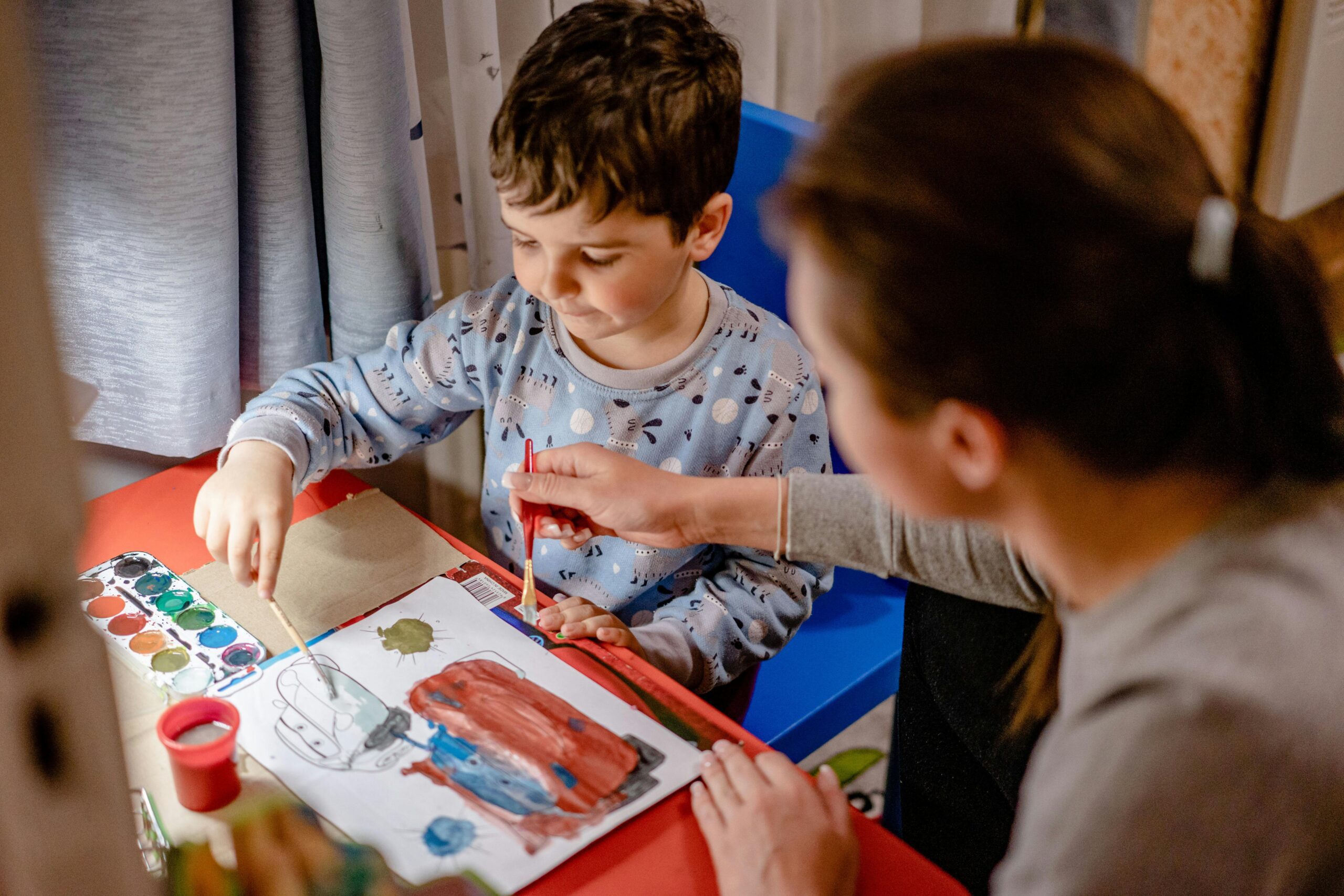
Step 1: Create a Dedicated Homework Window
- Same time daily – Predictability lowers resistance
- After a snack and short break – Brain energy must be replenished
- Before heavy screen use – Dopamine from screens makes focusing harder
- Before dinner for younger children – Evening mood deteriorates with hunger
- Before 7 PM for older children – Late homework disrupts sleep
Step 2: Prepare the Environment
✓ Do Create:
- Clear desk space
- Good lighting
- All supplies pre-gathered
- Minimal visual distractions
- Quiet (or soft background music)
✗ Do NOT Have:
- Phone/device visible
- Television on
- Clutter or mess
- Siblings playing nearby
- Parent hovering over shoulder
Step 3: Break Work Into Chunks
- 15–30 minute blocks (varies by age: younger = shorter blocks)
- One subject at a time (switching contexts is exhausting)
- Short movement breaks (3-5 minutes: walk, stretch, drink water)
- Visual timer (reduces time anxiety and increases autonomy)
Sample 45-Minute Homework Session (Ages 8-11):
Check-in (2 min)
“What homework do we have today? Let’s look at what’s most challenging first.”
Math/Core Subject (15 min)
Focus on the most demanding task while energy is highest
Movement Break (5 min)
Walk around, stretch, get water. Reset nervous system.
Secondary Subject (15 min)
Reading, science, or other less demanding task
Review & Reflection (5 min)
“What was easiest? What was hardest? What helped you think?”
Pack Up (3 min)
Create a clean slate for the next day. Builds routine.
Step 4: End With Review, Not Re-Teaching
This is the critical step most parents miss. The end of homework is where metacognition happens—reflection on thinking.
Do NOT: Correct uncorrected work, re-explain concepts, or quiz on answers. The teacher will see the real learning gaps and address them.
✓ What This Accomplishes
- Builds metacognitive awareness (thinking about thinking)
- Shifts focus from grades to learning process
- Reduces parent-child academic conflict
- Gives teacher accurate picture of understanding
Reducing Homework Anxiety: Signs Parents Often Miss
Children don’t always say “I’m anxious.” They show it through behavior. Many of these behaviors get misinterpreted as laziness, avoidance, or defiance—when they’re actually protective responses to overwhelm.
What Homework Anxiety Looks Like
Physical Signs
- Stomach aches at homework time
- Headaches before starting
- Frequent bathroom trips
- Complaints of tiredness
- Appetite changes
Behavioral Signs
- Avoidance (“I forgot my book”)
- Procrastination
- Excessive erasing/redoing
- Perfectionism
- Claiming “it’s too hard”
Emotional Signs
- Emotional outbursts over small mistakes
- Crying easily
- Irritability before homework
- Shutdown/flatness
- Frustration intolerance
What Actually Helps
| Sign | What It Means | What Helps |
|---|---|---|
| Stomach aches at homework time | Anxiety is real and physical | Reduce load; increase breaks; address underlying worry |
| Excessive erasing/perfectionism | Fear of failure is driving behavior | Normalize mistakes; model accepting imperfection |
| Avoidance (“I forgot”) | Task feels too overwhelming to start | Break into smaller chunks; provide more structure |
| Emotional outbursts | Stress is at capacity; can’t regulate emotion | Stop immediately; emotional regulation comes before learning |
| Claiming “it’s too hard” | Feels helpless; has given up | Reframe as “hard but possible”; show progress |
Anxiety-Reducing Language Patterns
What to Say
Separating Identity From Performance
This is critical: When children receive performance-based feedback, they internalize it as identity feedback.
| Performance-Based (❌ Harmful) | Identity Impact | Process-Based (✓ Helpful) |
|---|---|---|
| “You’re so smart” | Implies intelligence is fixed; fear of failure increases | “You worked really hard on that” |
| “You got it wrong” | Feels like personal failure | “That’s not quite right yet. What could you try?” |
| “You’re bad at math” | Creates fixed identity; learned helplessness | “Math is tricky for you right now. Let’s build this skill” |
| “You’re not trying” | Feels blamed; damages motivation | “I see you’re stuck. What would help?” |
How to Talk During Homework: Scripts That Reduce Conflict
Language is one of the most powerful tools you have. The same issue handled with different words creates completely different outcomes.
Language Patterns That Work
❌ Triggers Resistance
“Why aren’t you paying attention?”
Implies blame; activates defensiveness
✓ Invites Thinking
“What part is hardest to start?”
Invites problem-solving; shows you’re on their team
❌ Triggers Defensiveness
“You know this.”
Implies they’re capable but not trying; shame-based
✓ Builds Collaboration
“Let’s look at the first step together.”
Offers team approach; reduces sense of isolation
❌ Triggers Shame
“This is easy.”
If it’s easy and they can’t do it, they feel dumb
✓ Validates + Supports
“This looks tricky. Let’s break it down.”
Names the difficulty; shows it’s solvable
❌ Triggers Shutdown
“You made a careless mistake.”
Implies failure; shame reduces future engagement
✓ Builds Learning
“Look, you got most of this. Show me your thinking on this part.”
Builds on strengths; invites reflection
The Power of Genuine Questions
Genuine questions invite thinking. Rhetorical questions trigger defensiveness. Here’s the difference:
This is a disguised criticism, not a real question
This invites them to think through the actual process
Moving From Instruction to Support
The shift from “teaching” to “supporting” is the most critical move you can make.
“Okay, here’s how you solve this. You multiply by the top number, then divide by the bottom. So 12 × 4 = 48…”
“You have two numbers here. What do you think the operation is asking you to do with them? Try one way and see if it makes sense.”
Why support works: It puts the cognitive work in your child’s brain, not yours. Your brain doing the work means their brain isn’t learning.
When Your Child Gets Frustrated
These dismiss the emotion and increase shame
This validates emotion and offers practical next step
Tools & Technology: What Actually Helps (and What Hurts)
Tools That Support Homework Success
Visual Timers
Reduce time anxiety. Children can “see” remaining time. Reduces “are we almost done?” interruptions.
Task Planners
Simple checklists build autonomy. Child checks off tasks as completed. Visual progress increases motivation.
Focus Music
Instrumental music, white noise, or nature sounds help many children focus. Lo-fi beats, classical, or binaural beats are popular.
Homework Tracking Sheets
Simple sheets where you check off completion. Not about grades—just tracking what was assigned and done.
Educational Apps
Khan Academy, IXL, Duolingo for skill-specific practice. Best when assigned, not parent-discovered.
AI Homework Assistants
Tools like ChatGPT can explain concepts (not do work). Teach children to ask questions like “Explain fractions as if I’m 8.”
Technology to Use With Caution
| Tool | Potential Issue | How to Use Responsibly |
|---|---|---|
| Over-monitoring apps | Reduces trust; increases secrecy | Use only if there’s a real safety concern; be transparent |
| Constant notifications | Fragments attention; disrupts focus | Silence all notifications during homework window |
| Reward systems (grades-based) | Reduces intrinsic motivation; creates transactional view of learning | Reward effort and process, not grades |
| Homework completion apps (auto-submit) | Removes accountability; teacher can’t see real learning | Keep submission as child’s responsibility |
Technology That Actively Hurts
❌ Avoid These
- Homework completion services – Creates dependency; prevents real learning
- Constant parental monitoring – Erodes trust; increases anxiety
- Using homework completion as punishment/reward currency – Damages motivation
- Screen use immediately before homework – Dopamine from screens makes focusing harder
- Homework help apps that “do the work” – Denies students the struggle needed for learning
AI Tools: The Right Way to Use Them
AI can be a powerful tutor if used correctly. Teaching children to ask good questions of AI builds critical thinking:
Child learns to ask specific, useful questions
Builds problem-solving; AI becomes thinking partner, not answer factory
Skips the learning entirely
Teach children this: AI is best for explaining confusing concepts or providing different examples, not for doing the work.
When to Step In (and When to Step Back)
One of the hardest skills for parents is knowing when to help and when to let children struggle productively. This distinction determines whether homework builds competence or dependence.
Step In When:
- Your child is stuck after genuine effort – They’ve tried, failed, tried again, and are truly stuck
- Anxiety blocks task initiation – They literally cannot start due to fear
- Instructions are genuinely unclear – Not that they didn’t read them; they’re actually ambiguous
- Emotional dysregulation is happening – Tears, rage, shutdown require immediate pause
- Task is beyond developmental capacity – Multi-step work for a 6-year-old, for example
- They’ve asked for help – This is actually a sign of healthy help-seeking
Step Back When:
- Mistakes are part of learning – Errors are how the brain learns. Let the teacher see them.
- The child is capable but resistant – They can do it; they just don’t want to
- The struggle is productive – They’re thinking, trying, problem-solving. Don’t interrupt this.
- Homework is no longer dominating your evening – You’ve achieved the goal
- The child is developing confidence – Letting them succeed alone builds competence
- Your involvement creates conflict – Step back; let teacher-student relationship handle it
The Productive Struggle Test
How to know if struggle is productive:
- Child is thinking, trying different approaches, asking questions
- Frustration is present but manageable (not rage or shutdown)
- Child is making progress, even small steps
- Child is willing to try again after failure
- Child is asking “how” questions, not avoidance questions
If these aren’t present, struggle is unproductive, and you should step in.
The Parent Role Clarity
| What You ARE | What You ARE NOT |
|---|---|
| A safety person | The homework helper |
| A guide when needed | The teacher |
| A structure-builder | A monitor |
| An emotion-coach | A performance-evaluator |
| A believer in their capability | A fixer of their work |
Case Example: A Real Homework Reset
This is a real example of what changes when parents shift systems, not intelligence.
The Before Picture
What It Looked Like
- 90 minutes of homework every night (3rd grade)
- Frequent arguments and power struggles
- Child crying, saying “I can’t do it”
- Parent exhausted and frustrated
- Homework dominated family evenings
- Child associating learning with stress
After Blueprint Implementation (4 weeks)
- 40–50 minutes total homework time
- Predictable, conflict-free routine
- Child completing work more independently
- Parent relaxed; still involved but not fighting
- Evenings freed up for family time
- Child saying “this is hard but I can do it”
What Actually Changed
- Nothing about the child’s intelligence or ability – Same kid, same homework
- Everything about the system – Timing, structure, language, parent approach
- Same assignments, different experience – The work didn’t change; the how did
The Specific Changes Made
| What Was Changed | Why It Mattered | The Result |
|---|---|---|
| Moved homework to 4 PM (from 7 PM) | Brain energy was fresh; no end-of-day fatigue | Work completed 30 minutes faster |
| Split into 3 chunks instead of one long block | Attention span matched developmental capacity | No more resistance and complaining midway |
| Parent used support language instead of instruction | Child took ownership; parent wasn’t “teaching” | Fewer arguments; child solved more independently |
| Stopped correcting every mistake | Teacher could see real understanding gaps | Teacher provided more targeted help |
| Added movement breaks and snack | Restored physical and mental energy | Sustained focus; better behavior |
✓ The Outcome
Same child. Same homework. Different system. Different results.
This is what the research shows: homework success is largely about structure and emotional safety, not intelligence.
Frequently Asked Questions
A widely-used guideline from the National Education Association (NEA) is the “10-minute rule”:
- Elementary (K-5): 10–30 minutes daily
- Middle school (6-8): 30–60 minutes daily
- High school (9-12): 1–2 hours daily (including active study time)
If homework is consistently exceeding these times, something is wrong—either the load is excessive, there are learning gaps, or the routine is inefficient.
No. Support understanding, not accuracy. Here’s why: Teachers need to see what your child actually knows. If you correct everything, the teacher sees your work, not your child’s learning. The errors are diagnostic—they tell the teacher exactly what to teach next.
Instead: Ask guiding questions. Don’t correct. Let the teacher provide feedback.
Focus on emotional regulation first. Refusal usually means one of these things:
- Task feels overwhelming (break it into smaller parts)
- They’re tired or hungry (wait; feed them)
- Fear of failure (reduce stakes; normalize struggle)
- Power struggle with you (step back; let teacher intervene)
- Learning disability or attention issue (get evaluated)
Do NOT power through refusal with force. This builds resentment and increases homework anxiety.
When structured well and matched to development level: Yes.
Research shows homework improves achievement when it:
- Is 10–15 minutes per grade level
- Reinforces current skills (not introduces new concepts)
- Is checked and provides feedback
- Matches developmental capacity
When excessive or poorly designed: No. Excessive homework reduces motivation, increases anxiety, and can actually harm achievement.
No, but there’s a difference between helping and doing.
- Helping: Asking questions, offering support, breaking tasks down, addressing anxiety
- Doing: Providing answers, explaining concepts in detail, correcting work, solving problems
Help with confidence and systems. Don’t do the cognitive work.
“Can’t” is often “won’t” or “scared to try.” Reframing as “not yet” builds growth mindset and invites problem-solving.
Three principles:
- Pause before escalating. If it’s getting heated, take a break. Homework is not worth damaging your relationship.
- Separate the child from the behavior. “I love you. This homework is frustrating me too. Let’s try a different approach.”
- Loop in the teacher. If homework is causing ongoing conflict, the teacher needs to know. They may adjust the load or approach.
Remember: You are the safe person. The teacher is the instructor. When those roles blur, conflict increases.
Yes, significantly. The foundations remain the same (structure, emotional safety, clear routines), but the implementation may be different:
- ADHD: Shorter blocks, more frequent breaks, movement, external structure (timers, checklists)
- Anxiety: Reduced load initially, lots of reassurance, focus on process not performance
- Learning differences: Match strategies to the learning profile; consider 504 accommodations or IEP modifications
Work with the school team. Homework strategies should align with what works in the classroom.
Yes, sometimes. If homework has become a major source of family conflict or is destroying your child’s mental health, it’s okay to tell the teacher: “We’re taking a break from homework for a week. We need to rebuild routine and reduce tension.”
Most teachers will work with you. They want students to learn, not suffer.
Use this judiciously— It’s a circuit breaker, not a permanent solution. But sometimes you need to reset the system entirely.
Downloadable Resources (Recommended CTAs)
These free resources are designed to implement the strategies from this guide immediately:
Daily Homework Routine Checklist
A simple, printable checklist your child can use to organize homework time. Builds autonomy and structure.
PDF, printable, 1 page
Homework Emergency Checklist
When homework time is falling apart, use this checklist to diagnose the problem and implement the 3-step reset.
PDF, printable, 1 page
Weekly Planning Template
For middle and high school students: a simple template for mapping out homework across the week and planning workload.
PDF, printable, 1 page
Communication Scripts for Teachers
Email and conversation templates for addressing homework concerns with your child’s teacher respectfully and clearly.
PDF, printable, 2 pages
Time Management Guide (by Age)
Age-specific strategies and techniques for teaching children to manage homework time independently.
PDF, printable, 3 pages
Growth Mindset Conversation Guide
Scripts for reframing struggle, building resilience, and helping children develop a learning mindset around homework.
PDF, printable, 2 pages
Final Thoughts: Homework Without Stress Is Possible
Homework does not need to damage relationships or harm mental health.
With the right structure, language, and expectations, homework can become:
A Practice Zone
Where children apply skills and build competence in a low-stakes environment
A Confidence Builder
Where they experience “I struggled and figured it out” repeatedly
A Manageable Habit
Where routine and structure replace stress and conflict
✓ The Goal of This Guide
Not perfect homework. Not straight A’s. Not compliance.
The goal is a child who feels safe while learning.
When that’s true, the homework gets done. The learning happens. The relationship stays intact.
Everything else follows.
Child Homework Stress Anxiety: 7 Proven, Powerful Ways to Support Kids Without Pressure
Parenting Guide 2026: 7 Powerful, Proven Frameworks That Transform Modern Parenting