Calm Kids Calm Home: Simple Sleep, Anxiety & Emotional-Regulation Routines for Busy Parents
Learn how to calm anxious kids, improve sleep, and build emotional-regulation routines at home. Research-backed strategies, age-wise plans, and printable calming tools for parents.
Quick Navigation
Why Calm Feels So Hard for Kids Today
It’s 8:45 PM. You’re five minutes away from bedtime, and your 7-year-old is wired—fully clothed, bouncing off furniture, mind racing with questions about whether monsters exist and what happens if they forget their homework tomorrow. Your toddler is crying because the socks feel “wrong.” And somewhere in the house, an older child is lying awake, despite hitting the pillow an hour ago, consumed by thoughts about whether they did well enough on today’s test.
Sound familiar?
If you’re a parent today, you’re navigating a version of calm that feels increasingly elusive. Kids are more anxious than previous generations. Sleep troubles are more common. Meltdowns over seemingly small things happen routinely. And if you’re a busy parent juggling work, responsibilities, and the emotional needs of your children, the guilt of not being able to “just make them calm down” can feel crushing.
The Truth About Calm
Calm isn’t a personality trait your child either has or doesn’t have. It’s a skill—and like any skill, it needs to be taught, practiced, and reinforced over time.
The good news? You don’t need perfect routines, meditation apps running daily, or an overhaul of your entire family rhythm. You need simple, evidence-backed strategies that fit into real life—the kind of life where bedtimes slip, homework stress is real, and sometimes your kid eats dinner at 6:30 and sometimes at 8.
This article will give you practical tools to help your child (and your whole home) feel calmer, sleep better, and manage anxiety more effectively. These aren’t quick fixes. They’re sustainable habits that work because they address how your child’s nervous system actually functions.
Quick Wins: 5-Minute Calming Scripts Parents Can Use Immediately
When your child is escalating—overwhelmed, anxious, unable to settle—you need words that work right now. Here are six simple calming scripts you can say aloud, exactly as written. These use language that validates feelings without amplifying them, and they naturally guide the nervous system toward calm.
“I hear you’re worried about tomorrow. That feeling makes sense—your brain is trying to protect you. But right now, in this moment, you’re safe in your bed. Nothing needs to be solved tonight. Your job right now is to rest, and I’m here. Let’s breathe together slowly—in for four, out for four.”
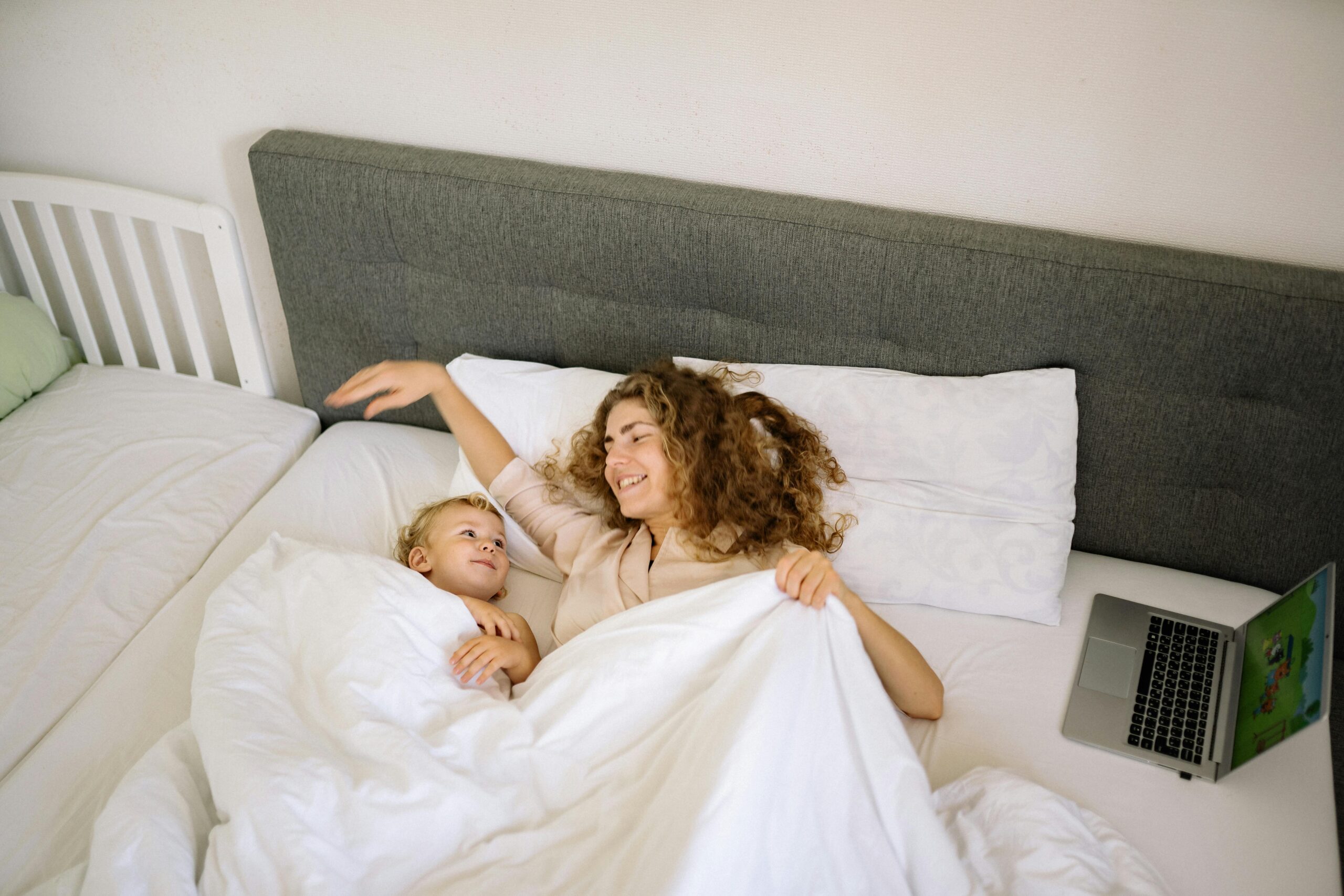
“I know you don’t feel tired yet. Sometimes our bodies need to rest before our brains catch up. Let’s lie quietly together for five minutes. If you’re still not ready for sleep after that, we’ll talk about what might help.”
“Your body is telling you that this feels uncomfortable, and that’s okay. Let’s find what feels better. Should we try a softer shirt, or would you rather take a break in a quieter space first?”
“I notice your body is getting frustrated. That’s a signal that you need a break. Let’s pause for a moment—we can try this again in a few minutes. What helps you reset: a drink of water, a few deep breaths, or some quiet time?”
“It’s okay to feel scared sometimes. Feeling scared is your body’s way of being careful. Let’s look around together. You’re in your safe bed, your door is open, and I’m nearby. What would make you feel safer right now—keeping the light on, having your stuffy closer, or me sitting here for a moment?”
“Today was tough, and your feelings make complete sense. You don’t have to be okay right now. I’m here, and we’ll get through this together. What do you need from me right now—do you want to talk, be quiet, or do something together?”
- Practice them silently before you need them so they feel natural when emotions run high
- Adjust the language to match your child’s age and how you naturally speak
- Remember: These scripts buy you time and create a pause in the escalation cycle
- Don’t expect immediate transformation—calmness often develops after you’ve validated the big feeling
How Sleep, Anxiety, and Emotional Regulation Are Connected
To help your child calm down effectively, it’s helpful to understand what’s actually happening in their body and brain when they’re anxious, tired, or dysregulated.
The Nervous System’s Job
Your child’s nervous system has a primary job: keep them safe. When the nervous system perceives a threat—whether it’s a scary dream, a difficult social situation at school, a change in routine, or an overwhelming sensory experience—it activates the stress response. This is actually healthy and protective when real danger is present.
The problem emerges when the nervous system stays activated too long, or becomes too easily triggered. That’s when calm becomes difficult.
When your child is stressed or anxious, their body releases cortisol and adrenaline—hormones that prepare the body for action. Heart rate increases. Muscles tense. The digestive system pauses. The thinking brain (where logic and reasoning live) steps back, and the emotional, reactive brain takes over. This is why an anxious child often can’t “just think clearly” or “stop worrying”—their neurochemistry literally doesn’t support calm reasoning in that moment.
Sleep and Anxiety: The Bidirectional Loop
Here’s where sleep becomes critical: Research from Stanford Medicine and the Journal of Pediatric Psychology shows that sleep and anxiety have a bidirectional relationship[1]. This means:
- Poor sleep makes anxiety worse. When kids don’t sleep enough, they’re 10–17 times more likely to experience anxiety symptoms[2].
- Anxiety disrupts sleep. Anxious children often experience longer time to fall asleep, nightmares, frequent night wakings, and persistent worry before bed[3].
What Research Shows
In studies, children with Generalized Anxiety Disorder (GAD) show elevated sleep anxiety, resistance to bedtime, and higher pre-sleep arousal (racing thoughts, physical tension) compared to non-anxious children. The lived experience shapes behavior—and this is what matters most.
How Emotional Regulation Fits In
Emotional regulation is the ability to notice, understand, and manage emotions in ways that help you function effectively. It’s not about eliminating big feelings—it’s about being able to feel them without being completely overwhelmed by them.
When children lack emotional regulation skills, everything feels harder:
- A small disappointment becomes a catastrophic meltdown
- A worry thought spirals into a full anxiety cycle
- Tiredness turns into irritability and aggression
- Excitement transforms into uncontrollable hyperactivity
Research from the Rochester Resilience Project shows that when children are explicitly taught emotional regulation skills—including emotion naming, self-control techniques, and maintaining equilibrium after stress—they show measurably improved behavior, better peer relationships, and fewer disciplinary incidents[5].
The Three Nervous System States
Understanding nervous system states helps explain why a calm bedtime routine actually works:
| State | What’s Happening | Signs in Your Child | What Helps |
|---|---|---|---|
| Hyperarousal | High cortisol, sympathetic nervous system dominant, body in “fight or flight” | Hyperactivity, racing thoughts, difficulty focusing, physical tension, emotional reactivity | Downregulation: slow breathing, gentle movement, dim lighting, quiet sounds |
| Hypoarousal | Low energy, parasympathetic nervous system overly activated, body “frozen” or withdrawn | Lethargy, difficulty engaging, emotional numbness, resistance to activity | Gentle activation: rhythmic movement, sensory input, connection, light activity |
| Calm Alertness | Balanced nervous system activation, prefrontal cortex engaged, body ready to respond | Focused attention, emotional flexibility, social engagement, ability to problem-solve | Maintenance: consistent routines, predictable transitions, adequate sleep, play |
The goal of calming routines isn’t to eliminate arousal—it’s to help your child move toward calm alertness, where their thinking brain can engage and they can handle life’s normal challenges.
Calm Bedtime Routines by Age
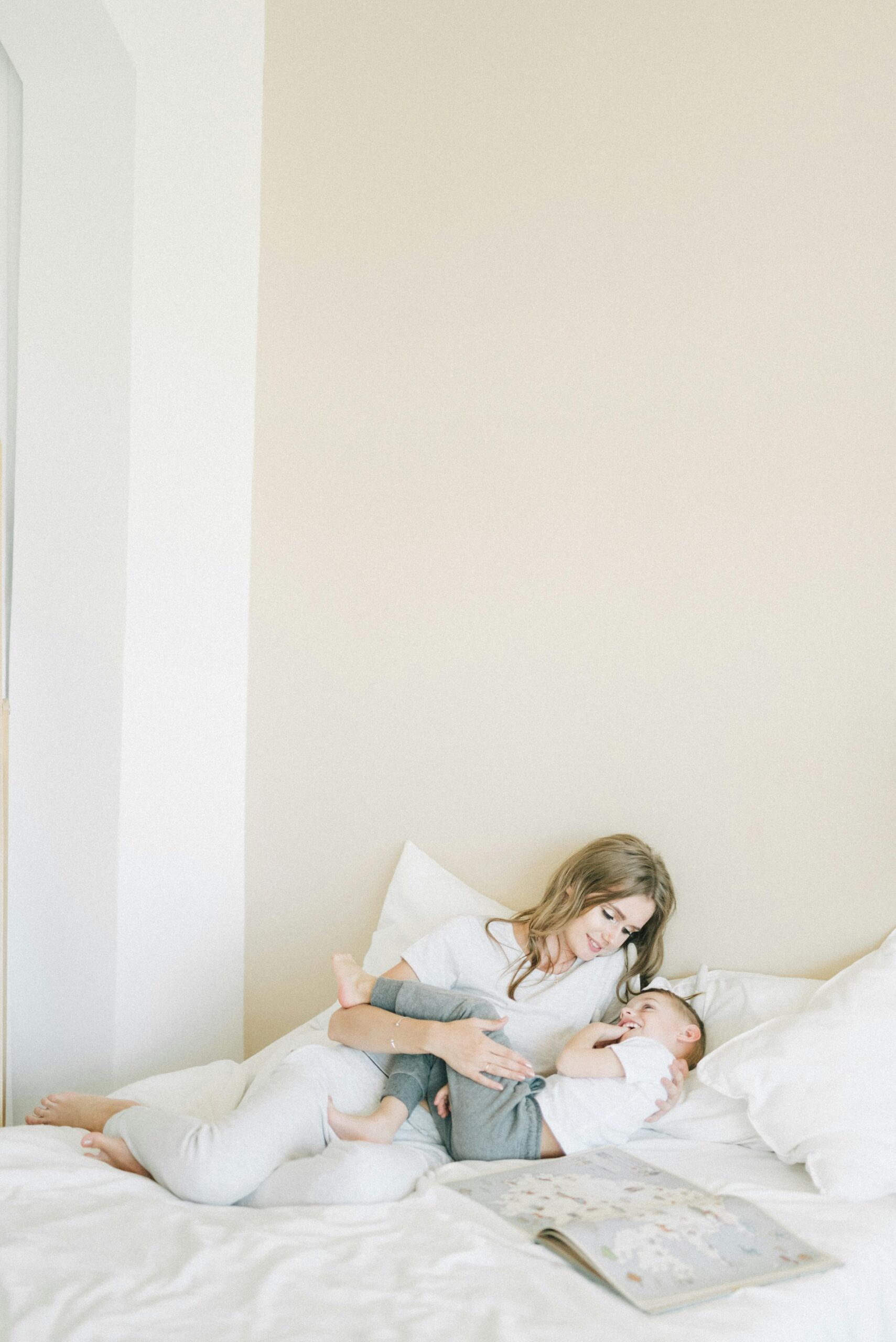
Bedtime routines work because they provide predictability and gradual downregulation. Kids whose bodies and brains don’t naturally wind down need external scaffolding to guide them toward sleep.
Toddlers (Ages 2–4)
The Challenge: Toddlers have limited ability to name emotions, struggle with transitions, and their bodies are still learning the sleep-wake cycle. Bedtime resistance is often rooted in separation anxiety or difficulty shifting from play mode.
30-Minute Routine (Ideal Timing: 30 mins before bed)
- Dim the lights (15–20 minutes before routine starts, if possible)
- End active play (no screens, no running games)
- Bath or wash-up (warm water is naturally calming; keep this brief—10 mins max)
- Gentle routine: pajamas, brush teeth (make it a sensory experience, not a battle)
- Quiet activity (reading 2–3 simple books, singing, or gentle rocking)
- Consistent phrase: “Now it’s time for sleep. Your body needs rest to grow strong.”
- Stay present (stay in the room briefly; some toddlers do better with gradual separation)
Quick Win Adjustment
If your toddler is resistant, let them “choose” between two options (“Do you want the blue pajamas or the red ones?” not “Do you want to get ready?”). This gives agency without reopening negotiations.
Reality Check: Toddlers will have nights where this falls apart. Illness, big transitions, new siblings, or developmental leaps often disrupt sleep temporarily. Consistency matters more than perfection.
Early Childhood (Ages 5–7)
The Challenge: By this age, kids start experiencing genuine anxiety about specific things: school performance, social situations, nightmares, or fears. Sleep often becomes a place where worries emerge. They’re cognitively advanced enough to catastrophize but not yet skilled at managing those thoughts.
45-Minute Routine (Ideal Timing: 45 mins before bed)
- After-dinner wind-down (start lowering activity levels 30 mins before routine)
- Bath or shower (slightly longer is fine; warm water helps muscles relax)
- Pajamas and teeth (no negotiation)
- Worry Time (5–10 mins): Sit together. Ask: “What’s on your mind tonight?” Let them name one or two worries. Don’t try to solve them. Say: “That’s something we can think about tomorrow when your brain is fresh. Tonight, your job is to rest.”
- Sensory Ritual (choose one):
- Reading (2–3 books)
- Audiobook or podcast for kids (Brains On!, Circle Round)
- Calming music or nature sounds
- Progressive muscle relaxation
- Lights out
- Stay briefly (5–10 mins if needed; use this time for quiet connection, not problem-solving)
Key Language
“I notice your brain is thinking a lot. That’s normal. Your brain is good at protecting you. Tonight, though, your body needs sleep more than your brain needs to solve problems. We can think tomorrow.”
What Actually Works: Kids this age often sleep better when they know what to expect. A visual checklist (picture cards of bath → pajamas → brush teeth → read → lights out) removes friction and gives them control.
School Age (Ages 8–11)
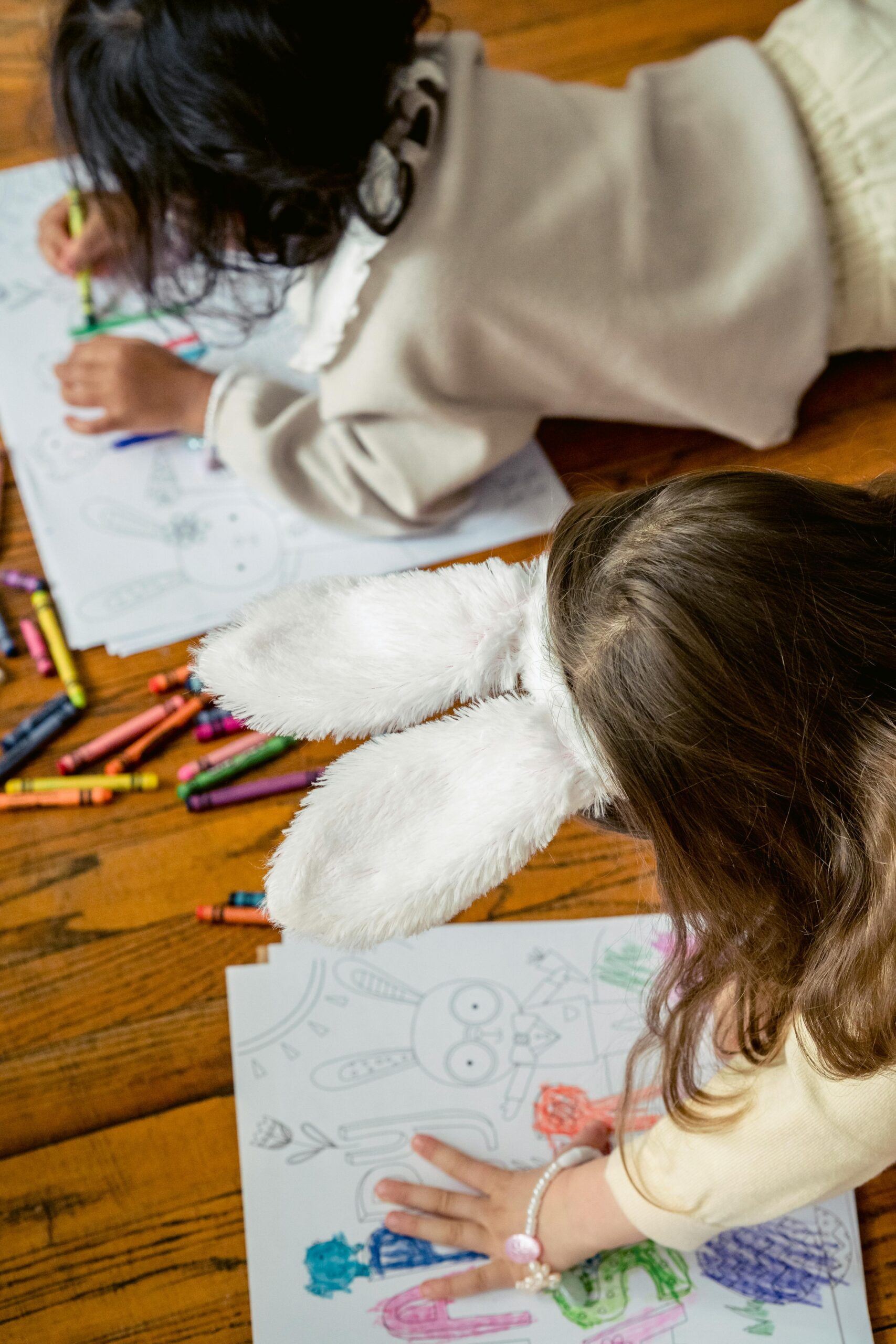
The Challenge: School-age children experience real academic and social stress. Sleep often suffers due to homework anxiety, peer conflicts, or overscheduling. Screen time and social media start impacting sleep quality. Their anxiety can feel very “real” to them—and it is—but their coping skills are still developing.
60-Minute Routine (Ideal Timing: 60 mins before bed)
- Electronic Sunset (screens off 60 mins before bed)
- This is non-negotiable if your child struggles with sleep. Blue light suppresses melatonin production, and the stimulation makes downregulation harder[6].
- Exception: Audiobooks, sleep podcasts, or guided meditations are fine.
- Dinner, homework, connection (done early; not close to bedtime)
- Physical Wind-Down (30 mins before bed):
- Light stretching or gentle yoga
- A walk outside (even 10–15 minutes helps tremendously)
- Free play (not competitive, not overstimulating)
- Hygiene routine (shower/bath, teeth, etc.)
- Bedroom prep (cool, dark, quiet)
- Calming Activity (choose one):
- Reading aloud (you read to them, not the reverse)
- Guided body scan meditation (apps like Calm Kids or Headspace)
- Journaling or drawing (low-pressure creative time)
- Conversation about their day (not problem-solving or getting worked up)
- Lights out
What Matters Most: At this age, consistency matters more than the specific activity. Kids’ brains thrive on routine. If you say lights out at 9 PM, their nervous system will start preparing for sleep at 8:30 PM if this happens every night.
Reality Check
School-age kids often push back on bedtime. They’re developing autonomy and resisting “baby” routines. Reframe the routine: “This is a time for your body to prepare for the rest it needs. Just like athletes warm up before games, your body needs to wind down before sleep.”
Pre-Teens (Ages 12–14)
The Challenge: Pre-teens are biologically wired toward later sleep due to circadian rhythm shifts (not laziness). But they also face significant stress: academic pressure, social anxiety, body image concerns, and screen addiction. Sleep deprivation at this age has serious impacts on mood, executive function, and emotional regulation.
60–90 Minute Routine (Ideal Timing: 60–90 mins before bed)
- Consistent Bed/Wake Times (even on weekends)
- Pre-teen bodies need 8–10 hours of sleep. That math matters.
- If your pre-teen insists they’re “not tired” until 11 PM, they may actually need an earlier wind-down start.
- No Screens 60 mins Before Bed
- This is the single most impactful change for this age group
- Social media, gaming, and texting all activate the nervous system
- Even “just checking” disrupts melatonin production
- Physical Movement Earlier in the Day
- Exercise helps sleep quality, but not close to bedtime
- 30 mins of moderate activity (walking, biking, sports) makes a measurable difference
- Bedroom environment (see Environment Design section)
- Evening Routine:
- Bath or shower
- Journaling, reading, or quiet music
- Optional but powerful: “Brain dump” on paper (writing down worries or tasks so the brain doesn’t have to hold them)
- Lights out at consistent time
- Accountability Without Shame:
- Pre-teens respond better to collaboration than control
- Try: “Your brain needs enough sleep to handle school and friends. Let’s figure out a bedtime that actually works for both of us.”
Important Note
Pre-teens often have real reasons for late-night wakefulness (hormonal changes, genuine sleep anxiety, or actual insomnia developing). If your pre-teen consistently can’t fall asleep despite a good routine, consider consulting a pediatrician or sleep specialist—this isn’t laziness or resistance.
Evidence-Backed Calming Strategies That Work at Home
Beyond bedtime routines, these specific calming practices are supported by research and proven effective in real home settings. You don’t need to do all of them—pick 1–2 that feel natural to your family.
1. Guided Breathing (The Box Breath)
How It Works: Children (and adults) often hold their breath when anxious, which signals the nervous system that danger is present. Slow, deliberate breathing signals safety.
The Box Breath (ages 5+)
- Breathe in for 4 counts
- Hold for 4 counts
- Breathe out for 4 counts
- Hold for 4 counts
- Repeat 4–5 times
Why This Works:
- The longer exhale activates the parasympathetic nervous system (the “rest and digest” response)
- The counting gives the anxious brain something concrete to do
- It’s portable and doesn’t require equipment
“Let’s try something. Imagine we’re filling a balloon slowly… hold it… now let it out like we’re blowing bubbles… hold the empty space. Let’s do that four times together.”
Real-Life Application:
- Before a stressful transition (doctor’s appointment, first day of school, test day)
- During a meltdown (once you’ve validated the feeling, offer: “Let’s try breathing together”)
- As a preventive routine (practice during calm times so it’s available during stressed times)
2. Sensory Grounding (Five Senses Exercise)
How It Works: Anxiety lives in future-oriented, “what if” thinking. Grounding brings the brain back to right now, to what’s actually safe and present.
The Five Senses Technique
Slowly name:
- 5 things you can see (colors, shapes, textures)
- 4 things you can touch (textures around you)
- 3 things you can hear (sounds in the room or outside)
- 2 things you can smell (real or imagined)
- 1 thing you can taste (a sip of water, gum, etc.)
Why This Works: Research shows grounding techniques reduce pre-sleep arousal and interrupt anxiety cycles by shifting focus from internal worry to external reality[7].
“Your mind is racing with worries. Let’s slow it down by noticing what’s right here around us. What’s one color you see? Now another? Listen—what do you hear?”
3. Progressive Muscle Relaxation
How It Works: Tension and anxiety are stored in the body. By deliberately tensing and releasing muscle groups, children become aware of the difference between tense and relaxed states—and learn they have agency in that transition.
Simple Version (ages 4+)
- “Make tight fists… squeeze… squeeze… now let go and notice how that feels”
- “Scrunch your face really tight… hold it… relax”
- “Tighten your legs and toes… hold… release”
- “Tighten your whole body like a statue… now melt like ice cream”
Why This Works: Progressive muscle relaxation is backed by decades of research for anxiety and sleep. It gives kids concrete, physical proof that they can change how their body feels[8].
4. Environment Design (The Underrated Factor)
Your child’s sleep environment profoundly impacts their ability to calm down. This isn’t about perfection—it’s about removing barriers to rest.
Temperature
Slightly cool rooms (65–68°F / 18–20°C) support better sleep. Warm bodies have harder time initiating sleep.
Light
Dim lights 30–60 mins before bed (signals melatonin production). Blackout curtains in the bedroom (even small light sources suppress melatonin). A small nightlight is fine if your child fears darkness, but ensure it’s dim.
Sound
White noise, nature sounds, or soft music (not silence, which amplifies every small sound). Apps like Calm, Insight Timer, or YouTube are free or low-cost. Avoid overstimulating sounds (TV, podcast with dialogue, music with lyrics).
Screens
No screens 60 mins before bed (the blue light and mental stimulation disrupt sleep onset). If your child uses a sleep app, put the phone/device outside the bedroom once the app starts.
Visual Clutter
A calm bedroom is less visually stimulating (toys on shelves rather than scattered). Not sterile, but organized. Calm colors (soft blues, greens, warm neutrals) versus bright primary colors.
Sensory Tools
Weighted blanket (if your child seeks deep pressure; especially helpful for sensory-seeking kids). Soft, familiar textures. A comfort object (stuffed animal, favorite blanket).
Why This Matters: Even the best breathing exercise won’t work if your child is overheated, overstimulated by light, or lying in a room that feels chaotic. Environment design is the foundation upon which other strategies build.
5. Emotional Naming and Validation
One of the most powerful—and underused—calming strategies is simple: help your child name their emotions in real time.
How It Works:
- When a child can name a feeling, they’re activating their thinking brain, which naturally downregulates the emotional reaction
- Validation (saying the feeling makes sense) reduces shame and increases the child’s sense of being understood
- This creates emotional safety, which reduces anxiety over time
Examples
Instead of: “Stop crying over nothing.”
Try: “I see you’re really disappointed. That makes sense—you were looking forward to that.”
Instead of: “You’re overreacting.”
Try: “Your body is having a big reaction. Let’s pause and figure out what you need.”
Instead of: “Don’t be scared.”
Try: “You’re feeling scared right now. That’s okay. You’re safe here with me.”
Research shows that children whose emotions are regularly named and validated develop better emotional regulation skills over time[9]. They’re not “weak” or “damaged”—they’re learning the language of their inner experience.
6. Limiting Overstimulation (The Often-Overlooked Strategy)
Many anxious, dysregulated children are simply overstimulated. Too many activities, too much noise, too many choices, inconsistent routines, too much screen time—the nervous system stays activated and never reaches calm.
Simple Changes
- Reduce After-School Activities (if your child is in structured activity every day, their nervous system doesn’t have downtime)
- Limit Screen Time (even “educational” screens)
- Create Transition Buffers (20–30 mins between major transitions, not back-to-back activities)
- Simplify Choices (offer 2 options, not 10)
- Protect Quiet Time (even 30 mins of unstructured, quiet play is restorative)
Why This Matters: A calm home environment often requires removing things, not adding them. More apps, more techniques, more structure sometimes makes it worse.
When to Support at Home — and When to Seek Professional Help
Not all childhood anxiety or sleep difficulty requires professional intervention. But there are clear signs that your child would benefit from additional support.
Normal Anxiety vs. Persistent Anxiety Disorder
Normal Anxiety in Childhood
- Anxiety about specific, temporary events (first day of school, medical procedure, social event)
- Occasional bedtime resistance or nightmares
- Worry that resolves within hours or a day
- Child can be reassured and return to activities
- Sleep disruption that resolves once the stressor passes
Signs of Persistent Anxiety
- Worry that’s constant, not tied to specific events
- Physical symptoms: stomachaches, headaches, difficulty breathing that have no medical cause
- Sleep disturbance that persists for more than a few weeks
- Avoidance of school, social situations, or normal activities
- Intrusive, repetitive thoughts the child can’t control
- Panic-like symptoms: chest tightness, racing heart, feeling of losing control
- Anxiety that significantly interferes with daily functioning
Red Flags for Sleep Disorders
See a pediatrician or sleep specialist if:
- Your child snores loudly and gasps during sleep (possible sleep apnea)
- Sleep resistance persists despite 4+ weeks of consistent routines
- Your child is excessively tired during the day despite seemingly adequate sleep
- Night terrors or nightmares happen multiple times per week
- Your child sleepwalks, teeth-grinds, or has other parasomnias
- Bedwetting continues after age 6 and is distressing
- Your child’s sleep significantly disrupts family functioning
Important Note
Sleep apnea, which causes repeated breathing lapses, has been linked to higher rates of anxiety and depression in children and should not be ignored[10].
When to Consult a Child Therapist
Consider a child therapist or psychologist if:
- Your child’s anxiety meets the criteria above and is not responding to home strategies
- Your child expresses hopelessness, suicidal thoughts, or extreme despair
- Sleep problems are accompanied by behavioral challenges (aggression, defiance) that home strategies aren’t addressing
- Your child has experienced trauma or significant loss
- You, as a parent, are feeling overwhelmed and need professional support in supporting your child
Types of Therapy That Help
- Cognitive Behavioral Therapy (CBT) for Anxiety: Helps children identify worry thoughts and develop coping strategies
- Parent-Child Interaction Therapy (PCIT): Trains parents in evidence-based techniques
- Play Therapy: For children who can’t verbalize feelings
- Sleep-Focused Therapy: For persistent insomnia
Important Reminder
Seeking professional help is not a failure. It’s a sign of strength and wisdom in recognizing when additional expertise would serve your child.
Daily Calm Activities That Build Emotional Regulation Over Time
Calming doesn’t happen only at bedtime. Emotional regulation is a skill that develops through repeated practice during calm moments. Here are daily activities that naturally build this skill.
Morning Calm Rituals (5–10 minutes)
Even a brief morning ritual sets the nervous system’s tone for the day.
Morning Breathing & Intention
- Sit together (before rushing into the day)
- Do 3–5 box breaths
- Ask: “What’s one thing you’re looking forward to today?” or “What’s something you want to remember about today?”
- No rushing, no devices
Why It Works: Kids who start the day with connection and intention experience less reactivity throughout the day.
After-School Decompression (20–30 minutes)
School is exhausting for kids, especially anxious or sensitive ones. They’ve been managing behavior, navigating social situations, and concentrating for 6+ hours. They need downtime.
What This Looks Like
- Arrive home; snack and water
- No homework for at least 20 mins
- Unstructured play, outside time, or quiet activity (not screens, but not directed activity)
- Brief connection: “Tell me one good thing about your day” (not grilling them about social dynamics)
Why It Works: Kids who get decompression time are calmer for homework, have fewer meltdowns, and sleep better.
Afternoon Movement (20–30 minutes)
Physical activity is one of the most underrated calming tools.
Ideal Types
- Gentle Walking (around the block, in a park)
- Unstructured Play (playing tag, riding a bike, climbing)
- Dancing (dancing together to music in your living room)
- Nature Time (collecting leaves, sitting by water, exploring)
Why It Matters: Exercise releases endorphins and helps burn off the nervous system’s excess activation[11]. Walking in nature specifically lowers cortisol.
Parent Note
The key is consistency, not intensity. A 20-minute daily walk is more powerful than sporadic, intense activity.
Evening Connection Ritual (10–15 minutes)
Before bed, create space for connection without agenda.
What This Looks Like
- 1-on-1 time (if you have multiple kids, rotate)
- Something your child chooses (within reason)
- Not problem-solving, not discipline, not instruction
- Simple presence: reading together, building with blocks, coloring alongside them
Why It Works: Kids who feel consistently seen and connected experience less baseline anxiety. This one thing—consistent, calm, one-on-one connection—is profoundly calming to a child’s nervous system.
Weekly Calming Activities (Building Resilience)
- Yoga or Movement Classes: Many communities offer kids’ yoga; even a 15-minute YouTube class counts
- Nature Time: Hiking, park time, or sitting outside. Research shows nature reduces anxiety
- Creative Expression: Art, music, journaling, or building. Non-verbal outlet for feelings
- Cooperative Play: Games with no winner/loser. Reduces performance anxiety
- Mindfulness or Meditation Class: Age-appropriate programs or even 5–10 minutes daily at home
Frequently Asked Questions Parents Ask
Calming routines are not quick fixes. Most families see noticeable improvements in 2–3 weeks of consistent practice. Real change in baseline anxiety and sleep often takes 6–8 weeks. The key is consistency, especially on the days when you don’t see immediate results. Your child’s nervous system is learning a new pattern; that takes time.
Some children (especially those with sensory sensitivities or past trauma) can feel claustrophobic with breathing exercises. Try alternatives: progressive muscle relaxation, grounding (five senses), movement, or simple talking. Not every strategy works for every kid. Find what actually calms your child, not what you think should work.
Meditation can work beautifully for some kids and feel impossibly difficult for others. Younger children (under 8) often do better with guided meditations focused on stories or nature sounds rather than sitting in silence. Pre-teens and teens may benefit from body-focused practices (progressive muscle relaxation, yoga) more than sitting meditation. Experiment and let your child guide what helps.
Night is when anxieties often amplify: it’s quiet, there are fewer distractions, and the brain spirals. This is very common. You’re not failing. Try: ensuring the room environment is genuinely calming (cool, dark, quiet), limiting pre-sleep worry rumination (maybe a “worry journal” earlier in the day), and ensuring daytime anxiety is being addressed (professional support may help). Don’t panic or convey alarm—calm, steady presence is more soothing than problem-solving.
- Toddlers (2–3 years): 11–14 hours (including naps)
- Preschool (3–5 years): 10–13 hours
- School-age (6–12 years): 9–12 hours
- Pre-teens (13–14): 8–10 hours (biologically shift later)
Most children in developed countries sleep less than these recommendations. This matters; sleep debt accumulates.
Yes. Blue light suppresses melatonin production, and the mental stimulation activates the nervous system. Even “educational” screens. The research is unambiguous: kids sleep better without screens before bed. This is the single highest-impact change you can make for sleep-anxious children.
Frame it as information, not control: “Your brain needs sleep to work well tomorrow. Let’s figure out what routine actually helps your body get ready for sleep.” Involve your child in designing the routine, offer choices within boundaries, and stay calm and consistent rather than punitive. Battles escalate anxiety; collaboration reduces it.
Melatonin is not a long-term solution and isn’t regulated as strictly as medications. It can mask underlying sleep issues that need addressing. It might be helpful short-term (traveling, major transitions) with a pediatrician’s guidance, but routine use isn’t recommended, especially for young children. Sleep hygiene and anxiety management are the foundation.
Real sleep disorders (like sleep apnea) involve physical symptoms: loud snoring, gasping, excessive daytime sleepiness, or documented breathing lapses. Sleep resistance often improves with consistent routines and anxiety management. If it doesn’t improve after 4–6 weeks of consistent effort, a pediatric sleep specialist can rule out physiological issues.
Co-sleeping can be comforting short-term, especially for younger children. Long-term, most sleep experts recommend gradually building your child’s confidence in independent sleep, even if you’re nearby. A middle path: start in their room, gradually move closer to independence. If co-sleeping is working for your family culture and everyone is sleeping well, that’s valid. If it’s creating stress or perpetuating anxiety, help your child build independence gradually, with reassurance.
Downloadable Calm Tools for Parents
The following printable and audio resources can support your family’s calming practice. These are optional—the connection and consistency you provide matter far more than tools—but many families find these helpful references.
What’s Included in the Kit
Bedtime Checklist (Printable)
A visual checklist helps kids (and parents) stay on track and gives them a sense of accomplishment. Suggested items: Dinner finished, Homework done, Bath/shower taken, Pajamas on, Teeth brushed, Calm activity, Lights out.
Emotion-Naming Chart
A simple chart showing feelings (happy, sad, angry, scared, calm, confused, excited, lonely) with brief descriptions and calming strategies for each. Visual charts help children develop emotional vocabulary and know what to do when they feel certain ways.
5-Minute Calming Scripts (Laminated Reference)
Print and laminate the scripts from earlier in this article to keep on your fridge or in your bedroom. In the moment when you’re overwhelmed, having the exact words visible reduces the cognitive load.
Guided Sleep Audio Resources
Insight Timer (free app): “Sleep Stories for Kids,” “Meditations for Kids with Anxiety”
Calm (paid app): “Daily Calm,” “Sleep Stories”
Headspace for Kids (paid): “SOS for Stress,” “Sleep”
YouTube: Search “calm music for kids sleep” or “guided meditation for kids anxiety”
Tip: Listen to these together first during calm daytime hours so your child knows what to expect at bedtime.
Final Thoughts: Calm Is a Skill, Not a Personality Trait
Here’s what we know from research: Your child is not “broken” if they struggle with anxiety or sleep. They’re not “too sensitive” or “difficult.” They’re experiencing a nervous system that needs support in learning to downregulate.
This is teachable. This is fixable. And you—their parent—are the most powerful tool in their toolbox.
Calm doesn’t mean your child will never feel worried, scared, or frustrated. It means they’ll have the skills and support to move through those feelings without becoming completely overwhelmed by them. It means they’ll know (in their body and brain) what calm feels like, and they’ll be able to access it when needed.
The routines you establish now—the breathing practice, the consistent bedtime, the evening connection, the emotional naming—these aren’t just for tonight’s sleep. They’re building your child’s baseline resilience for the next 20 years of their life.
A Reminder on Imperfection
Some nights will be hard. Some routines will fall apart. You’ll forget the scripts. Your child will resist. That’s not failure—that’s normal parenting. What matters is that you keep coming back to the practice, with patience and compassion for both your child and yourself.
Your calm matters too. Kids absorb the nervous system state of their caregivers. Your ability to stay relatively calm (imperfectly, humanly calm) while supporting your anxious child is profoundly stabilizing for them. This isn’t about being zen. It’s about being present, consistent, and genuinely trying.
You’re doing better than you think. And your child is already learning that they can feel big feelings and recover from them. That’s the foundation of everything.
References
Travel Hacks for Traveling With Kids: A Calm,9 Proven Guide for Flights, Road Trips, and Hotels