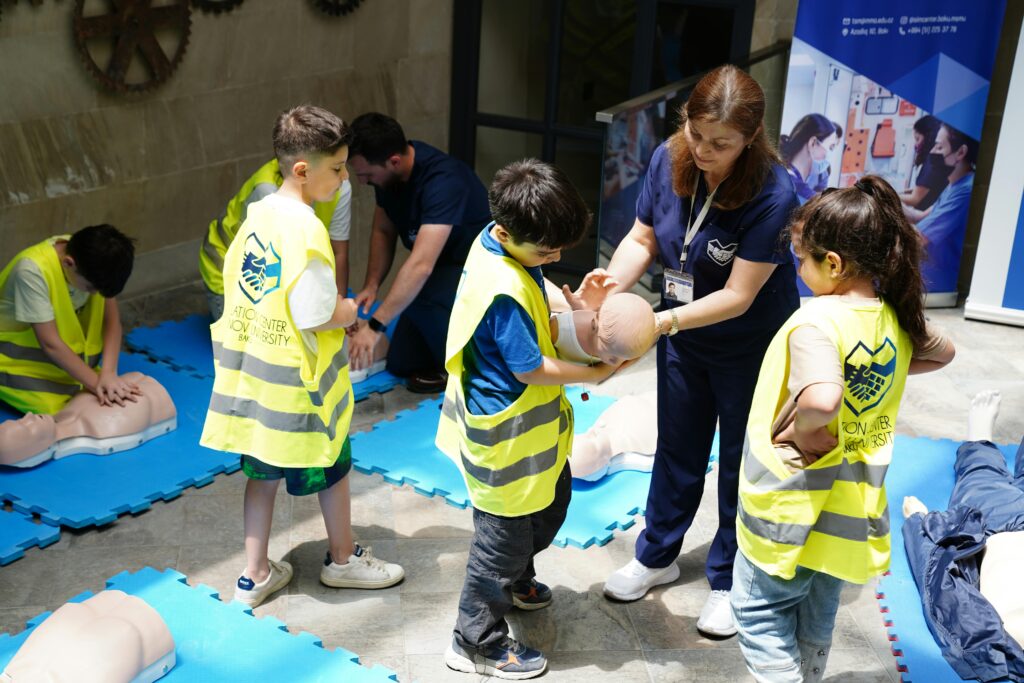
Teaching Life Skills to Kids
Your 8-year-old still can’t make their own breakfast. Your 13-year-old has never done laundry. Your 17-year-old doesn’t know how to manage money or make a basic meal.
You tell yourself: “I’ll teach them eventually.” Or: “It’s faster if I just do it.” Or: “They have time before they move out.”
Then suddenly they’re moving to college (or moving out, or getting their first job), and they’re calling you from their dorm asking how to separate colors from whites.
Here’s what most parents don’t realize: Life skills aren’t something kids absorb passively. They need to be taught, practiced, and reinforced over time.
And here’s the challenge: Most parents don’t have a clear framework for WHAT to teach at WHAT age, HOW to teach it without frustration, and WHEN the kid should be able to do it independently.
So we either teach nothing (and send unprepared kids into the world), or we wait until they’re teenagers (and have to cram in everything we should have taught them over the previous decade).
This article is the complete roadmap. A year-by-year implementation plan for teaching real-world life skills. Not just chores—actual independence. From age 2 (self-care basics) through age 18+ (financial management, problem-solving, decision-making).
You’ll learn:
- Which skills matter at each age (and why)
- How to teach them without power struggles
- Realistic timelines for mastery
- Common mistakes parents make
- How to scaffold learning (start easy, gradually increase challenge)
- What happens when you DON’T teach these skills
By the end, you’ll have a clear plan to raise kids who can actually take care of themselves—and who understand that being part of a family means contributing.
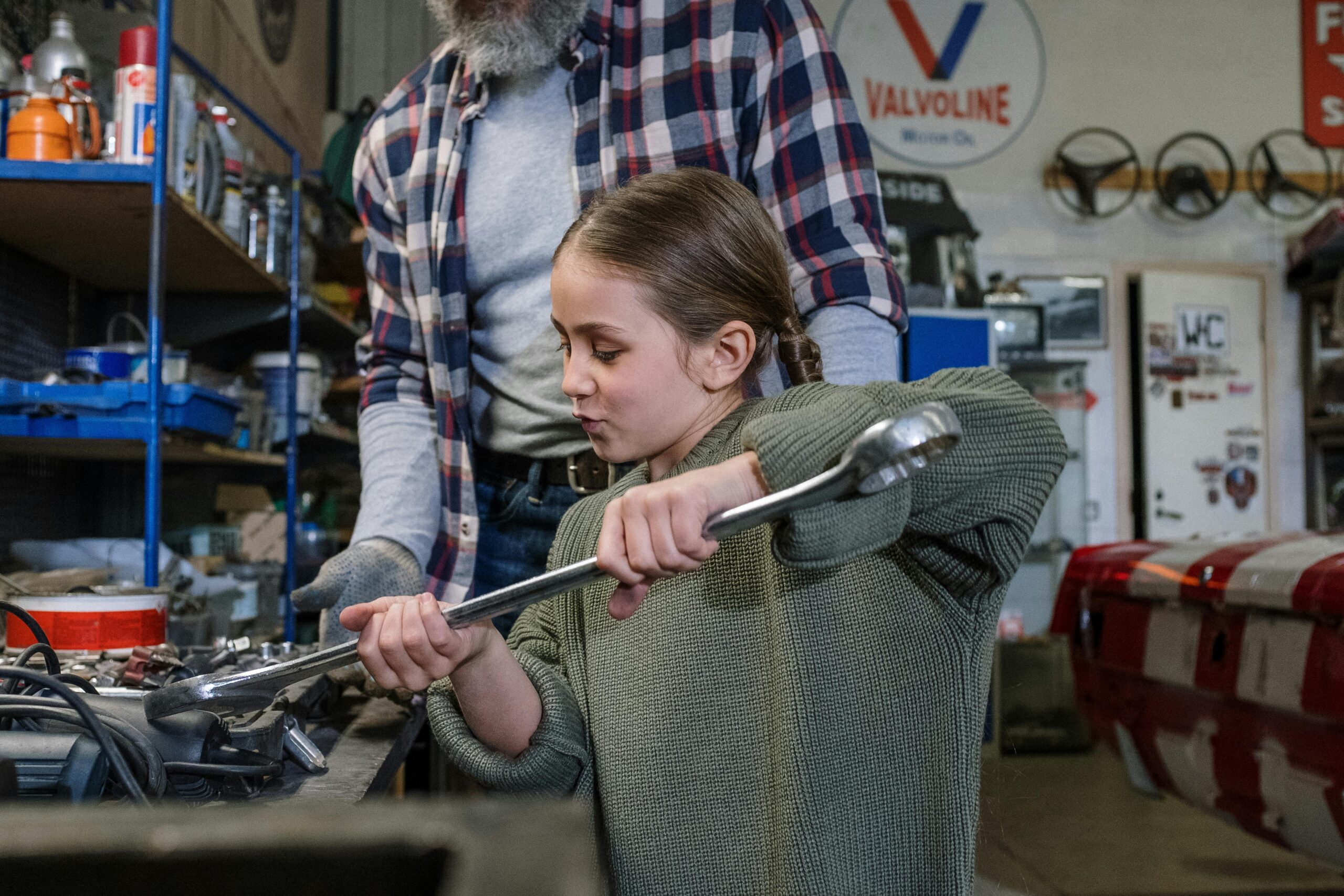
Why Life Skills Matter (Beyond Just Doing Chores)
Teaching life skills isn’t about having a clean house or making your kid do unpaid labor. It’s about building actual competence and confidence—which has massive implications for mental health, decision-making, and adult success.
Competence & Self-Efficacy
Research from Albert Bandura on self-efficacy shows that children who successfully complete tasks (even small ones) develop belief in their own competence. This belief transfers to other areas: “If I can do laundry, maybe I can handle this homework. If I can cook dinner, maybe I can try that team sport.” Mastery in small, concrete tasks builds psychological resilience and confidence.
Executive Function Development
Life skills like planning a meal, managing time, or organizing a space are executive function practice. Every time a kid plans what they need to do and executes the steps, their prefrontal cortex is strengthening. This isn’t busywork—it’s brain development.
Mental Health & Anxiety
Research published in Developmental Psychology shows that children who don’t learn life skills and are over-managed by parents show higher rates of anxiety and depression. Why? Because they haven’t built the evidence that they can handle challenges. They lack the skills and confidence to navigate problems independently. Conversely, kids who are given real responsibility and allowed to solve problems develop lower anxiety and better coping skills.
Ages 2-4: Foundation (Self-Care & Helping)
Main task: Building interest in helping and introducing basic self-care. Their coordination is improving but still limited. Their motivation is based on novelty and your attention. This is the “I want to help!” phase—use it.
Skills to Focus On
- Self-care: Washing hands, brushing teeth, getting dressed (with help), using the potty
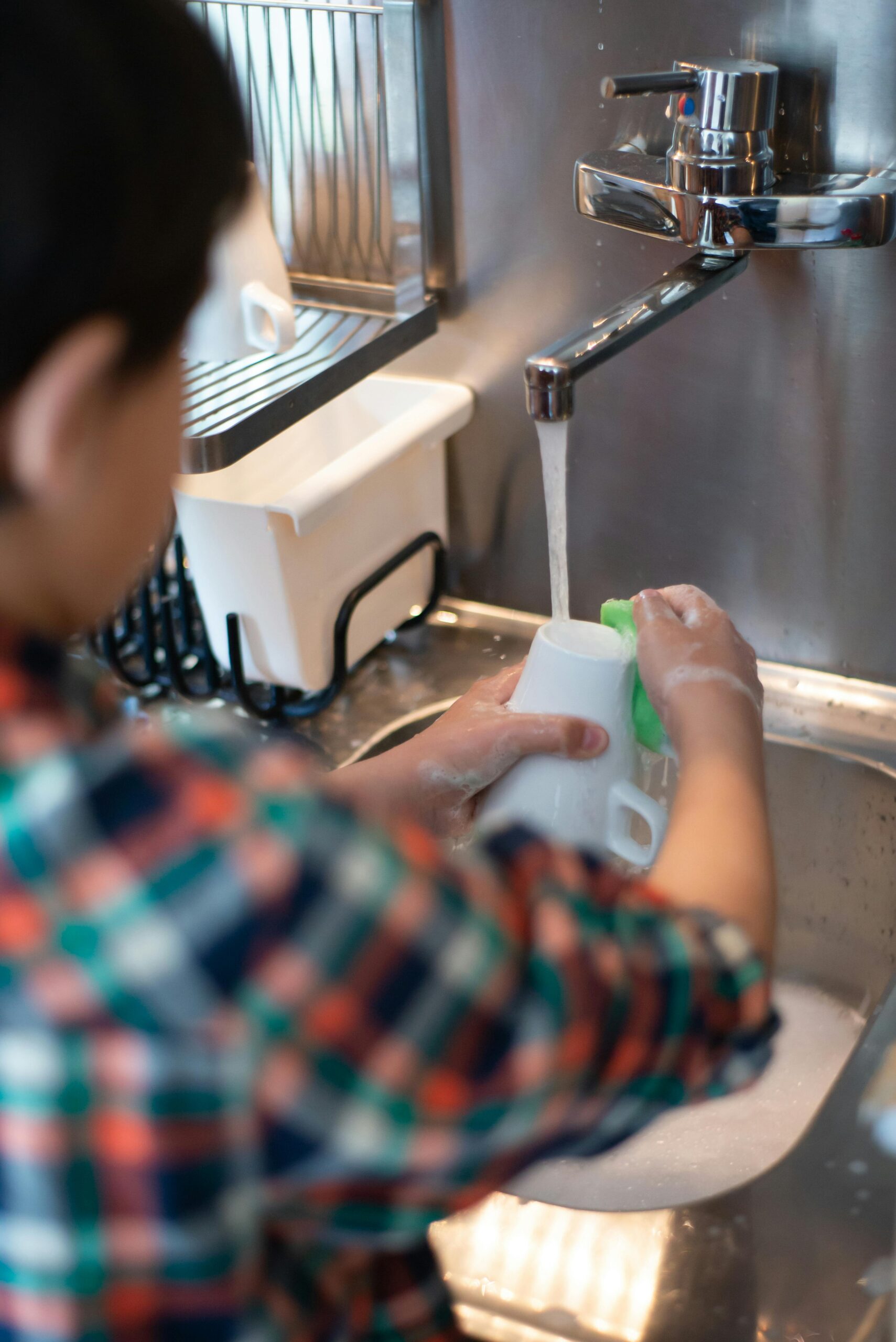
- Helping: Putting toys in a bin, wiping up spills (messy but willing), helping in the kitchen (stirring, pouring with supervision)
- Following simple instructions: “Get your shoes” or “Put this in the trash”
- Using utensils: Eating with a spoon (very messily)
Teaching Strategy: The 4-Week Progression
Week 1: Model → You do it, they watch and narrate every step.
Week 2: Guide → You do it together; they take the lead on some steps.
Week 3: Supervise → They do it; you’re nearby but not helping unless stuck.
Week 4: Independent → They do it independently; you check occasionally.

Ages 5-7: Expanding Independence
Main task: Building competence in daily self-care and household contributions. Kids this age are eager to help (for now) and can follow multi-step instructions. They still need reminders and supervision but are capable of more.
Skills to Focus On
- Self-care: Bathing/showering (with supervision), dressing themselves completely, brushing teeth, combing hair
- Meal prep: Pouring milk (into a cup, with practice), making simple sandwiches (with help), setting the table
- Household tasks: Loading the dishwasher, folding simple items, sweeping, taking out trash (lightweight bags)
- Time management: Following a basic morning routine with pictures (get dressed, eat breakfast, brush teeth)
- Money: Introduction to coins, basic allowance (no complex financial concepts yet)
Introduction of Allowance
Amount: $1-2/week. What it’s for: Being part of the family (basic chores included). Key: They lose it if chores aren’t done. They can spend it on things they want. Natural consequence of spending = no money.
Ages 8-11: Real Responsibility
Main task: Building genuine competence and ownership. Kids this age can do most household tasks independently (not always well, but independently). Their motivation is shifting from pleasing you to having autonomy and money. Use this.
Skills to Focus On
- Kitchen skills: Cooking simple meals (scrambled eggs, pasta), using basic kitchen appliances (microwave, toaster), meal planning basics
- Laundry: Loading/running washer and dryer, folding, sorting by color (start around age 9-10)
- Household management: Vacuuming, bathroom cleaning, taking out trash independently, organizing their own space
- Money management: Increased allowance ($2-5/week), tracking spending, saving for something they want
- Problem-solving: Starting to handle basic conflicts without running to you
- Time management: Starting homework without nagging, preparing for school the night before
Allowance Strategy
Regular chores: Non-negotiable, included in allowance (setting table, basic cleanup). Extra work: Extra money (yard work, deeper cleaning). Rule: If chores aren’t done, allowance is held. No nagging—natural consequence.

Ages 12-14: Building Adult Skills
Main task: Developing the skills they’ll need as teenagers and adults. Resistance is normal—this is when autonomy-seeking kicks in. Use natural consequences instead of nagging.
Skills to Focus On
- Cooking: Planning and preparing meals, following recipes, basic nutrition understanding
- Laundry: Complete independence (washing, drying, folding, putting away)
- Money: Managing allowance, basic budgeting, understanding wants vs. needs, starting to save
- Time management: Getting ready on time, managing homework without reminders, planning ahead
- Social skills: Handling peer conflicts, making decisions about friendships, basic assertiveness
- Problem-solving: Coming to you only after they’ve tried to solve it themselves
- Household: Contributing meaningfully to family tasks, not just assigned chores
What to Do When They Resist
Stop nagging. Instead, let natural consequences happen: Forgot lunch? They feel hungry at school. Didn’t do laundry? They run out of clean clothes. Overspent allowance? They can’t afford the thing they want next week. The world teaches what your nagging never will.
Ages 15-18: Independence & Decision-Making
Main task: Approaching adult autonomy. Your job is to be available, not controlling. They should be capable of handling most life skills independently (though they may need your wisdom sometimes).
Skills to Focus On
- Financial literacy: Earning money, managing a job, understanding credit, paying for things they want
- Decision-making: Making choices and living with consequences, thinking through pros/cons, seeking advice when needed
- Problem-solving: Handling conflicts, academic challenges, social issues independently (not your job to solve)
- Self-care: Medical appointments, health decisions, personal responsibility
- Planning: College/job applications, managing long-term projects, thinking about the future
- Advanced cooking: Planning meals for household, preparing for company, meal prep skills
- Household independence: Could manage a household if needed (doing laundry, cooking, cleaning, managing basic maintenance)
Your Role
Advise when asked. Don’t rescue. Let them experience consequences. Be available but not controlling. They’re becoming an adult—treat them accordingly.

Natural Consequences: Let the World Teach Them
The most powerful teaching tool you have is not punishment—it’s natural consequences. Let the real world teach what you can’t.
Example Scenarios
- Didn’t do laundry → Runs out of clean clothes
- Spent all allowance → Can’t afford the thing they want next week
- Forgot lunch → Eats what’s available at school
- Didn’t study → Poor grade (the learning opportunity)
- Stayed up late → Tired the next day
- Forgot homework → Faces teacher about it (they contact teacher, not you)
- Overspent money → No money for fun thing they wanted
- Didn’t plan ahead → Stress when deadline approaches
Your Role When They Face Natural Consequences
- Don’t rescue them
- Don’t say “I told you so”
- Just sympathize: “That’s tough. What will you do next time?”
- Let the consequence do the teaching
The Bottom Line: Teaching life skills takes time and patience. Yes, it’s faster to do it yourself. But you’re investing now so they’re capable and confident later. Kids who can cook, manage money, handle laundry, and problem-solve become adults who are competent, confident, and emotionally healthier. That’s worth the short-term inconvenience.
Common Questions & Answers
That’s the point—they don’t know how yet. That’s why you teach them. Don’t accept “I don’t know how” as an excuse. Use the 4-week teaching progression: Model → Guide → Supervise → Independent. They’re capable of learning far more than you think.
Most kids resist. Chores aren’t negotiable (they’re part of being in a family), but you can offer autonomy: “You need to do laundry or dishes this week. Which one?” Give them some control over when/how, even if the what is non-negotiable. And make sure allowance is contingent on completion—no allowance = strong motivation.
Yes, in the short term. But you’re paying long-term with kids who can’t take care of themselves. This isn’t about efficiency; it’s about development. You’re investing time now so they’re capable, confident, and independent later. That’s worth the short-term inconvenience.
Stop trying to convince them to take responsibility. Stop nagging. Just let natural consequences happen. Forgot to do laundry? They run out of clothes. Didn’t manage money? They don’t have it when they need it. The consequence will teach what your nagging never will. Your calm response when they face the consequence (“That’s tough. What will you do next time?”) is far more powerful than anything you could say.
It’s never too late to start. Use the 4-week teaching progression no matter their age. Yes, it will feel like a gap, but kids are far more capable than you think. Start with one skill (cooking a simple meal, doing laundry), take the time to teach it properly, then move to the next. Progress over perfection.
Give autonomy wherever possible. Let them choose when/how they’ll do it (within your parameters). Use natural consequences instead of punishment. Ask questions instead of giving directions: “What do you think?” or “What would happen if…?” rather than telling them what to do. Make it their responsibility, not your battle.
🔹 Government & Medical Authorities
- Centers for Disease Control and Prevention – Parenting & Child Development
Evidence-based guidance on age-appropriate independence, responsibility, and daily skills.
🔗 https://www.cdc.gov/parenting - American Academy of Pediatrics (HealthyChildren.org)
Pediatrician-reviewed advice on teaching self-care, responsibility, and decision-making by age.
🔗 https://www.healthychildren.org - National Institutes of Health (MedlinePlus – Child Development)
Medical context for physical, cognitive, and emotional readiness tied to life skills.
🔗 https://medlineplus.gov/childdevelopment.html
🔹 Child Development & Skill-Building Authorities
- Harvard Center on the Developing Child
Explains executive function, self-regulation, and why certain skills emerge at specific ages.
🔗 https://developingchild.harvard.edu - Zero to Three
Gold-standard guidance for early independence skills (ages 0–5).
🔗 https://www.zerotothree.org - UNICEF – Life Skills & Adolescence
Global authority on practical life skills, autonomy, and confidence building.
🔗 https://www.unicef.org/life-skills
🔹 Parenting Reference Publishers
- Verywell Family
Age-specific guides on chores, self-care, money skills, and independence.
🔗 https://www.verywellfamily.com - Raising Children Network
Highly trusted, government-backed parenting guidance on life skills by age.
🔗 https://raisingchildren.net.au - Child Mind Institute
Connects life skills with emotional regulation, confidence, and resilience.
🔗 https://childmind.org
🔹 Peer-Reviewed Research
- PubMed (NIH)
Use sparingly to support claims about independence, executive function, and adolescence readiness.
🔗 https://pubmed.ncbi.nlm.nih.gov
High-Quality YouTube Videos
These videos are expert-led, evergreen, and safe for embedding. Place them contextually within age sections.
- Harvard University – Building Life Skills Through Executive Function
Explains how skills like planning and self-control develop.
🔗 https://www.youtube.com/watch?v=EFmM0j1k7Zc - CDC – Parenting Tips for Raising Independent Children
Government-backed advice on age-appropriate responsibility.
🔗 https://www.youtube.com/watch?v=5gX9QK9p9xA - Zero to Three – Teaching Everyday Skills to Young Children
Practical examples for toddlers and preschoolers.
🔗 https://www.youtube.com/watch?v=KXK6pF1ZP0Y - Child Mind Institute – Helping Kids Build Independence
Focus on confidence, emotional readiness, and skill practice.
🔗 https://www.youtube.com/watch?v=Vb8cY9Yz1qE - UNICEF – Life Skills for Children and Teens Explained
Excellent for preteen and teen sections.
🔗 https://www.youtube.com/watch?v=0KpF5Zk6z4M
How to Fix children’s sleep problems: Proven 60-Minute Solution (2026)
New Parent Survival Guide: 25 Parenting Tips for Baby’s First Year