Building Family Routines That Work -Actually Stick: Science-Backed Framework + Implementation System
Stop the daily chaos. Build sustainable routines that reduce stress, improve sleep, and strengthen family connection—without rigid schedules or power struggles.
Monday morning. 7:15 AM. You’ve already asked your kid to get dressed three times. They’re still in pajamas. You’re yelling. They’re crying. You’re late.
You get to work stressed. Your kid gets to school stressed. Everyone’s day starts in the red.
Or it’s 8:30 PM. Bedtime. You said 8:00. It’s now 8:45, and your child is still awake, you’re at the end of your rope, and tomorrow you have to do it all again.
Or it’s the transition from school to home: chaos. Everyone’s tired and hungry and overstimulated. Someone melts down over a snack. The afternoon spirals.
This is what most families experience: daily chaos masquerading as “just how it is.” Constant negotiation. Repeated reminders. Power struggles over the same things, every single day.

Here’s what most parents don’t realize: The chaos isn’t a character flaw. It’s a systems failure.
Without clear routines, your child’s brain is constantly asking: “What happens next? What’s expected of me? Do I need to fight for what I need?” This puts their nervous system in a low-level stress response all day long. Without clear routines, your brain is constantly deciding, reminding, negotiating, enforcing. That’s exhausting.
But here’s the good news: Routines are one of the highest-leverage parenting tools you have. Solid routines don’t just reduce daily stress—they improve behavior, sleep quality, emotional regulation, and family connection. Research from pediatrics, neuroscience, and family psychology shows that predictable routines are foundational to healthy child development.
The Science Behind Routines (Why They Actually Work)
Brain Development & Predictability
Research from the Center on the Developing Child at Harvard University shows that children’s brains are wired to seek patterns and predictability. When the environment is predictable, the brain can relax. When it’s chaotic or unpredictable, the threat-detection system (amygdala) stays activated. A child in a constant state of “what happens next?” is in a low-level stress response all day.
This impacts learning, emotional regulation, sleep quality, and behavior.
Sleep Quality & Routine
The American Academy of Pediatrics (AAP) emphasizes that consistent bedtime routines improve sleep quality, duration, and daytime behavior in children across all ages. A meta-analysis in *Pediatrics* (2017) found that children with consistent routines had fewer behavioral problems, better academic performance, and lower anxiety compared to children without routines.
Executive Function Development
Children raised with clear routines develop stronger executive function skills (planning, organizing, impulse control). Why? Because routines scaffold the brain’s ability to organize and anticipate. Over time, kids internalize the routine—and transfer those skills to other areas.
Part 1: Routines vs. Schedules (The Foundation)
Schedules Are Time-Based
A schedule is about when something happens. “Bedtime is 8:00 PM. Dinner is 6:00 PM.”
Schedules are useful for coordination, but they’re rigid. If 8:00 PM rolls around and your kid isn’t ready for bed, you’ve failed the schedule. This creates stress, not sustainability.
Routines Are Sequence-Based
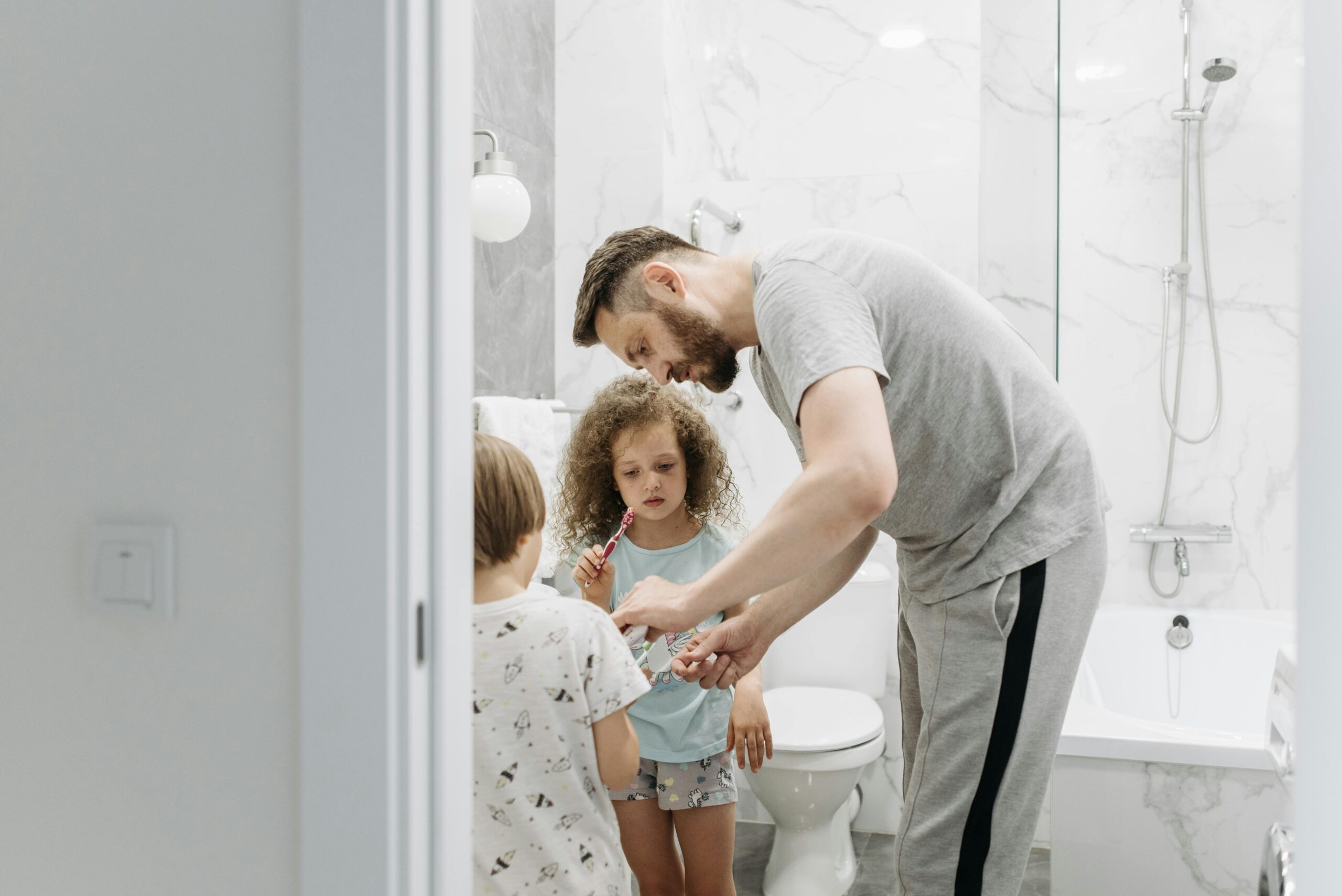
A routine is about the sequence of steps that happen in order. “Bath → pajamas → brush teeth → story → lights out.”
Routines are flexible about timing. If it takes 20 minutes or 40 minutes, the sequence is still the routine. If you get to the story and the kid isn’t tired yet, you can extend the story. The routine is intact.
Why This Distinction Matters
Schedules create rigidity and failure. Routines create predictability and flexibility.
Schedule approach: “You need to be in bed at 8:00 PM. It’s 8:15 and you’re still reading. Bedtime failure. Now I’m angry.”
Routine approach: “We’re in the middle of the bedtime routine: bath, pajamas, teeth, story, bed. We’re at the story step. When the story is done, we move to bed.”
The Power of Sequence
When a routine is sequence-based, something magical happens: the routine becomes the enforcer, not you.
Instead of: “It’s time to leave. Now. Stop playing,” the routine says: “We’re at the ‘leave the house’ step of our morning routine. What’s the next thing we do?”
The routine is external. You’re just guiding them through it. This removes you from the position of “bad guy” and makes the routine the guide.
Part 2: The Routine-Building Framework (The System)
Step 1: Choose Your Routines (Be Selective)
You can’t build routines for everything. You’ll burn out. Instead, choose 3-5 key routines that have the most impact on daily life.
High-impact routines:
- Morning routine: Gets everyone out the door on time, reduces morning stress, sets the tone for the day
- Bedtime routine: Improves sleep quality, reduces bedtime battles, teaches wind-down skills
- Transition routine (school-to-home): Smooths the chaotic switch from structured to unstructured time, prevents afternoon meltdowns
- Meal time routine: Builds family connection, teaches table manners, creates predictability around food
- Homework/work-from-home routine: Creates focus, reduces power struggles, teaches responsibility
The key decision: Which routines, if they worked well, would most reduce your daily stress? Start there.
Step 2: Map the Sequence (Not the Time)
For each routine you’ve chosen, write down every single step in order. Be detailed. Don’t skip steps because you think they’re obvious.
Example: Morning Routine Sequence
- Wake up (alarm or parent)
- Use the bathroom
- Get dressed (with clothes picked out or in a designated spot)
- Eat breakfast
- Brush teeth
- Pack backpack
- Put on shoes
- Leave the house
That’s 8 steps. Without the sequence written, your morning has 8 micro-negotiations. With it written and visible, you have a clear flow.
Step 3: Make It Visible (The Game-Changer)
Here’s where most parents miss the magic: if the routine is only in your head, you’re still the enforcer.
Make the routine visible in a way your child can see and follow:
- Visual checklist (ages 4+): Pictures of each step. Laminate it. Kid checks off each step. Ownership shift: kid is checking themselves off, not being reminded.
- Timer (ages 2+): Visual timer showing how much time is left for each step. Kids can see the time passing. Reduces “Are we done yet?” negotiations.
- Song or rhythm (ages 1-4): “Bath time, bath time, scrubby-scrub-scrub!” Make it a song. The song IS the routine. When the song ends, the step ends.
- Verbal cue (all ages): You say the same exact words every time: “We’re at the ‘get dressed’ step. What do we do?” The cue becomes predictable.
Why Visibility Matters
A visible routine removes the parent from the role of “reminder.” Instead, the routine is the reminder. The child can see what’s next. They’re self-directing instead of being directed.
Step 4: Practice (The Implementation Phase)
Don’t expect a routine to work the first time. You have to practice it.
Week 1: Narrate every step
You walk through the routine with your child, narrating each step. “Here we go, morning routine: step 1 is wake up. You did it! Step 2 is use the bathroom…”
This seems tedious, but you’re imprinting the sequence in their brain.
Week 2: Ask them what’s next
“We just got dressed. What’s the next step?” They tell you. You affirm. You’re still guiding, but they’re starting to own it.
Week 3: Refer to the visual
“What does the chart say is next?” They look at the chart. They do the step. You’re now barely involved.
Week 4: Routine is self-executing
Most days, the routine runs without your input. When they get stuck, you ask: “What’s next on the routine?” They check and continue.
This is the timeline for most kids (ages 4+). Younger kids take longer. Expect 4-6 weeks for a routine to feel truly automatic.
Part 3: Specific Routines (Step-by-Step Implementation)
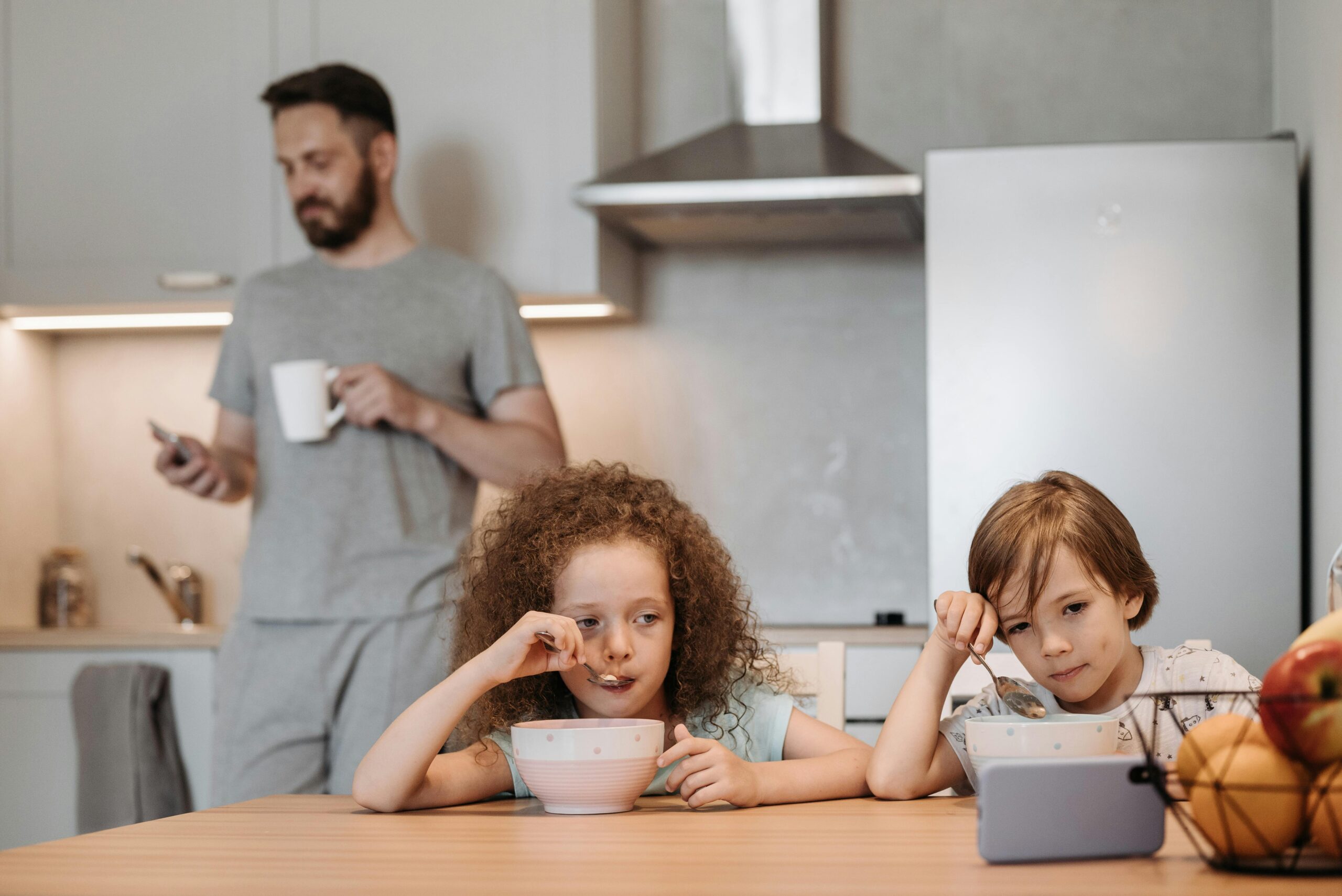
Morning Routine: Setting the Tone for the Day
Why it matters: How a child starts their day sets their neurological tone. A rushed, stressful morning creates a stressed child and adult. A calm, predictable morning starts everyone in a regulated state.
The framework (for 5-12 year olds):
| Step | Duration | Parent Role |
|---|---|---|
| Wake up (alarm or gentle wake) | 3 min | Set alarm or gently wake; don’t nag |
| Bathroom (toilet, wash hands) | 5 min | Remind first day only; then they own it |
| Get dressed (clothes prepped) | 5 min | Clothes are laid out or in a drawer; kid chooses |
| Eat breakfast | 10 min | Food is ready or they make simple choice |
| Brush teeth | 3 min | Bathroom is ready; timer helps |
| Pack backpack/prepare to leave | 5 min | Checklist visible; kid prepares their own |
| Put on shoes/leave | 3 min | Shoes are by the door; final check |
Total time: 30-35 minutes (be realistic)
Key principle: Everything is prepped the night before. Clothes are ready. Breakfast is planned. Backpack is by the door. The morning routine is about execution, not decision-making.
Bedtime Routine: The Sleep Game-Changer
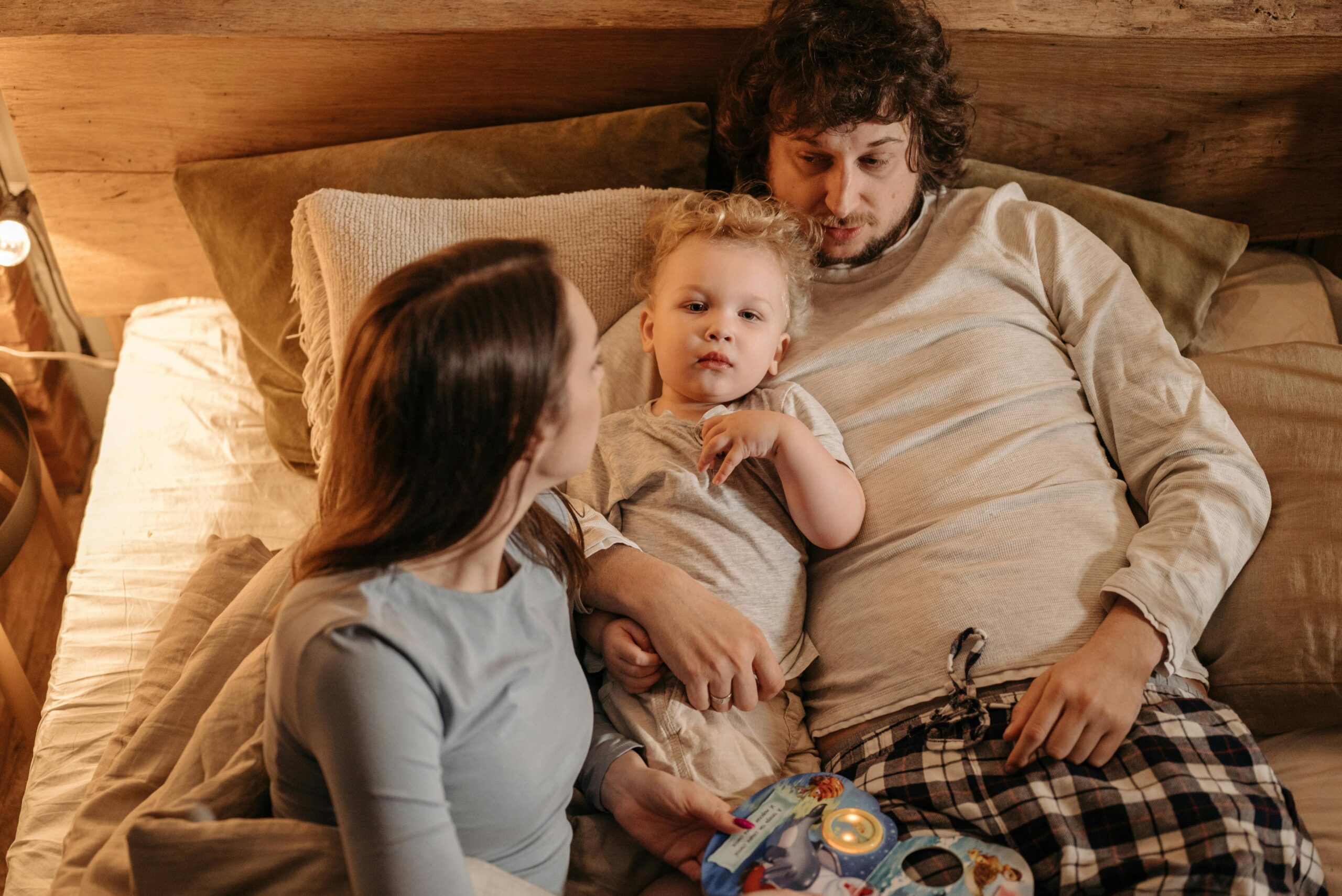
Why it matters: A consistent bedtime routine is one of the single most important tools for sleep. It signals the body to produce melatonin. It transitions the nervous system from activated to calm.
| Step | Duration | Key Point |
|---|---|---|
| Wind-down activity (calm play, puzzle, reading) | 15-20 min | No screens 1 hour before bed |
| Dinner (if not already done) | 30 min before routine | Nothing heavy right before bed |
| Bath or shower | 10-15 min | Warm water signals body to cool down for sleep |
| Pajamas and bedroom prep | 5 min | Cool, dark room; white noise optional |
| Brush teeth | 3 min | Last step before connection time |
| Connection time (cuddles, story, music) | 10-15 min | This is the attachment piece; don’t skip |
| Lights out | Immediate | Once lights are out, stay out |
Total time: 45-60 minutes
Non-negotiable elements:
- No screens 1 hour before bed. Blue light suppresses melatonin production. This is science, not opinion.
- Same time every night (even weekends). Consistency helps the body’s internal clock. Even 30 minutes of variation impacts sleep quality.
- Cool (around 65-68°F), dark room. These are the conditions that promote sleep.
- Connection time before bed. Stories, cuddles, talking about the day. This is attachment fuel for kids.
Templates & Tools (Ready to Use)
Template 1: Morning Routine Visual Checklist
MORNING ROUTINE
☐ Wake up (alarm goes off)
☐ Use the bathroom
☐ Get dressed (pick clothes from the chair)
☐ Eat breakfast
☐ Brush teeth (2 minutes)
☐ Pack backpack
☐ Put on shoes
☐ Leave the house
Template 2: Bedtime Routine Visual Checklist
BEDTIME ROUTINE
☐ Dinner
☐ Bath or shower
☐ Put on pajamas
☐ Brush teeth
☐ Dim the lights
☐ Story time
☐ Cuddle time
☐ Lights out
Template 3: After-School Routine (For 5-11 Year Olds)
3:15 PM – Welcome Home
☐ Say hi to Mom/Dad
☐ Tell one thing about your day
☐ Give a hug
3:20 PM – Snack Time
☐ Eat a snack
☐ Drink water
☐ Relax for 5 minutes
3:25 PM – Movement Time
☐ Go outside OR dance to a song OR play a game
☐ Move for 10-15 minutes
☐ Get the wiggles out
3:40 PM – Homework/Quiet Time
☐ Do homework
☐ Or read a book
☐ Ask for help if needed

Troubleshooting: When Routines Break Down
Problem 1: The Routine Works for a Week, Then Falls Apart
Why: You may have relaxed consistency too early. Routines need 4-6 weeks of solid consistency to become truly automatic. If you back off enforcement at week 2, you’re restarting.
What to do:
- Check: Are you still doing the routine the exact same way? Or have you started skipping steps?
- If you’ve relaxed: Tighten back up. Return to full consistency for 2 more weeks.
- If you’ve been consistent: Something else changed. Look for external factors (new stress, schedule change, sleep deprivation).
- Add accountability: Visual checklist helps here—it makes inconsistency more obvious.
Problem 2: Your Kid Refuses the Routine / Fights It
Why: Could be: (1) Too much change too fast, (2) Not involved in creating it, (3) Too many steps, (4) Underlying resistance to change, or (5) They’re testing whether the routine is real.
What to do:
- If you created it alone: Involve your kid in redesigning it. “This isn’t working. What would make it better?” They’ll own what they create.
- If it’s too complex: Simplify. Reduce to 4-5 steps max. Add more steps after they’re comfortable.
- If they’re testing: Stay consistent anyway. “I know you don’t like the routine. And this is what we’re doing. Let’s see how it goes.”
Problem 3: Different Caregivers Do It Differently
Why: Consistency means consistency across all caregivers. Kids notice immediately if adults aren’t on the same page.
What to do:
- Have a conversation with your co-parent. “The routine is working. Let’s use the same one so it’s consistent.”
- Write it down and post it where they can see it.
- Acknowledge that different people will add their own touches (different stories, different songs) and that’s okay. The sequence stays the same.
Frequently Asked Questions
Do routines make kids rigid or inflexible?
No, the opposite. Routines provide a secure base, which actually allows kids to be more flexible. When they know what to expect, they’re less anxious and can adapt better to changes.
What if my family’s schedule is too chaotic for routines?
Chaotic families need routines MORE, not less. A routine doesn’t require a rigid schedule. You can have a flexible bedtime routine that adapts to when they actually get home. The sequence stays the same (bath → pajamas → story), but the timing shifts.
How long does it take for a routine to become automatic?
4-6 weeks of consistent practice. Neuroscience shows that 21 days is the minimum for a new behavior to start feeling automatic. But for kids, especially younger kids, 6 weeks is more realistic. This assumes you’re doing the routine the exact same way every single day.
Do I have to do routines for EVERYTHING?
No. Start with 1-3 high-impact routines. Most families see huge benefit from just bedtime and morning routines. Add more once those are solid. Trying to build 5 routines at once leads to burnout and failure.
What if my kid has sensory issues and can’t do the routine?
Adapt the routine, don’t abandon it. If your kid hates baths, use a quick shower instead. If they can’t handle fluoride toothpaste, use a different one. The sequence of steps is the routine; the specific details can adapt to your child’s needs.
My teenager won’t follow a routine. Is it too late?
Never too late, but approach it differently. Teens resist routines if they feel forced. Instead: “I notice you’re always rushing in the morning. What would help you feel less stressed?” Their answer might BE the routine—but they invented it. Teens who co-create their routines are way more likely to follow them.
Can I adjust a routine for weekends?
You can, but sleep routines should stay consistent. The bedtime routine should be similar on weekends (for sleep consistency). Morning routines can be more relaxed on weekends—later wake time, slower pace. But the sequence should stay roughly the same.
The Routine Revolution: From Chaos to Calm
If you’re reading this thinking “This sounds great, but I can barely keep my head above water right now,” I hear you. Adding a new system sounds like one more thing.
But here’s what I want you to know: Routines don’t add to your workload—they dramatically reduce it.
You’re already doing the work. You’re already negotiating, reminding, enforcing. What routines do is organize that work in a way that eventually requires less energy from you.
Week 1: feels harder: you’re actively building something new.
Week 2: You’re reinforcing it.
Week 3: It’s becoming automatic.
Week 4: You barely have to think about it.
By week 6, you’ll wonder how you ever lived without it.
Most parents who implement routines report:
- 30-40% reduction in daily power struggles
- Better sleep for the whole family
- Fewer mornings where someone is crying
- More mental space (because you’re not constantly deciding and enforcing)
- Stronger connection with their kids (because they’re less stressed)
Start small. Pick one routine. One. Build it solid over 6 weeks. Then add another.
Make it visible. Your kid can’t follow a routine that exists only in your head.
Be consistent. The same routine, the same way, every single day. This is what makes it work.
Adjust as needed. Routines aren’t prison sentences. They adapt as your family changes.
Your family’s rhythm is unique. Your routines should reflect that. But the scaffolding—the predictability, the sequence, the visibility—that’s universal. That’s what works.
You’ve got this. And your mornings, bedtimes, and afternoons will be calmer for it.
Government & Health Authority Resources
- CDC – Tips for Building Structure and Family Routines
Practical examples of routines and why structure supports children’s behavior.
https://www.cdc.gov/parenting-toddlers/structure-rules/structure.html - HealthyChildren.org – The Importance of Family Routines
American Academy of Pediatrics (AAP) guidance on why consistent routines benefit children’s development.
https://www.healthychildren.org/English/family-life/family-dynamics/Pages/The-Importance-of-Family-Routines.aspx - CDC – Positive Parenting Tips for Toddlers
While focused on toddlers, this resource provides routine elements like sleep and eating that scale to broader routines.
https://www.cdc.gov/child-development/positive-parenting-tips/toddlers-1-2-years.html
Parenting & Expert Articles (Authority and Practical Tips)
- RaisingChildren.net – Routines for Families: How & Why They Work
Explains the purpose, benefits, and examples of family routines across age groups.
https://raisingchildren.net.au/grown-ups/family-life/routines-rituals-relationships/family-routines - Medium – Building Healthy Family Routines That Actually Work
Practical habit advice and psychology of how routines benefit children’s behavior and self-regulation.
https://medium.com/@bryan.states2/let-me-tell-you-something-about-family-routines-theyre-harder-to-establish-than-a-good-credit-7cb72006c6a1
Scientific/Scholarly Research (Supports Evidence Claims)
- Parent Routines and Child Outcomes (NCBI / ResearchGate)
Links family routines with protective health and behavioral outcomes (e.g., obesity and behavior regulation).
https://www.researchgate.net/publication/262150066_Parent_routines_child_routines_and_family_demographics_associated_with_obesity_in_parents_and_preschool-aged_children - Parenting Knowledge, Attitudes & Practices – NIH/NCBI
Reviews how parental structure, routines, and caregiving influence emotional and behavioral competence.
https://www.ncbi.nlm.nih.gov/books/NBK402020/
YouTube (Expert-Led + Practical Guides)
These YouTube links demonstrate high-engagement, practical routines content that parents trust. Embed them with contextual captions in your article.
🔗 How to Make Your Child Follow a Routine — Dr. Debmita Dutta
Practical routine-building tips for children.
https://www.youtube.com/watch?v=NnB_9FGmBkU
🔗 Establishing Routines Can Help Strengthen Family Bonds
Explains how consistency and predictability benefit families.
https://www.youtube.com/watch?v=9LH7X8CW3F0
🔗 Daily Routine Tips for Your Family
Fun and simple routine ideas to save time and reduce chaos.
https://www.youtube.com/watch?v=FHfb-HOpMII
🔗 Creating a Simple Routine – Anne Clarkson
Step-by-step routine creation from agricultural extension specialist.
https://www.youtube.com/watch?v=9aL4-KaVBv4
🔗 A Good Enough Parent Podcast: Practical Morning Routine Strategies
Audio/visual expert discussion on practical morning routines.
https://www.youtube.com/watch?v=t8yfFA-thJU
How to Fix children’s sleep problems: Proven 60-Minute Solution (2026)
New Parent Survival Guide: 25 Parenting Tips for Baby’s First Year